
Last updated October 16, 2026
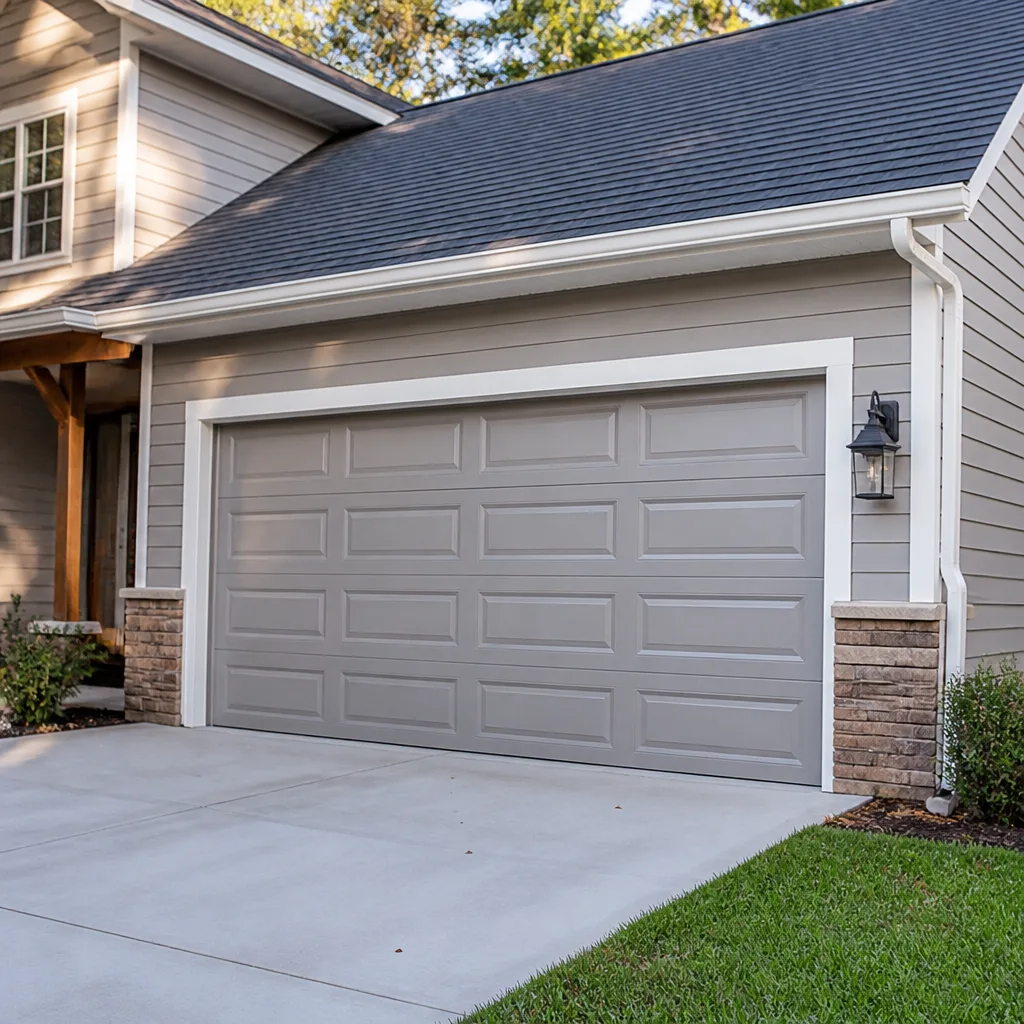 Raised-panel steel
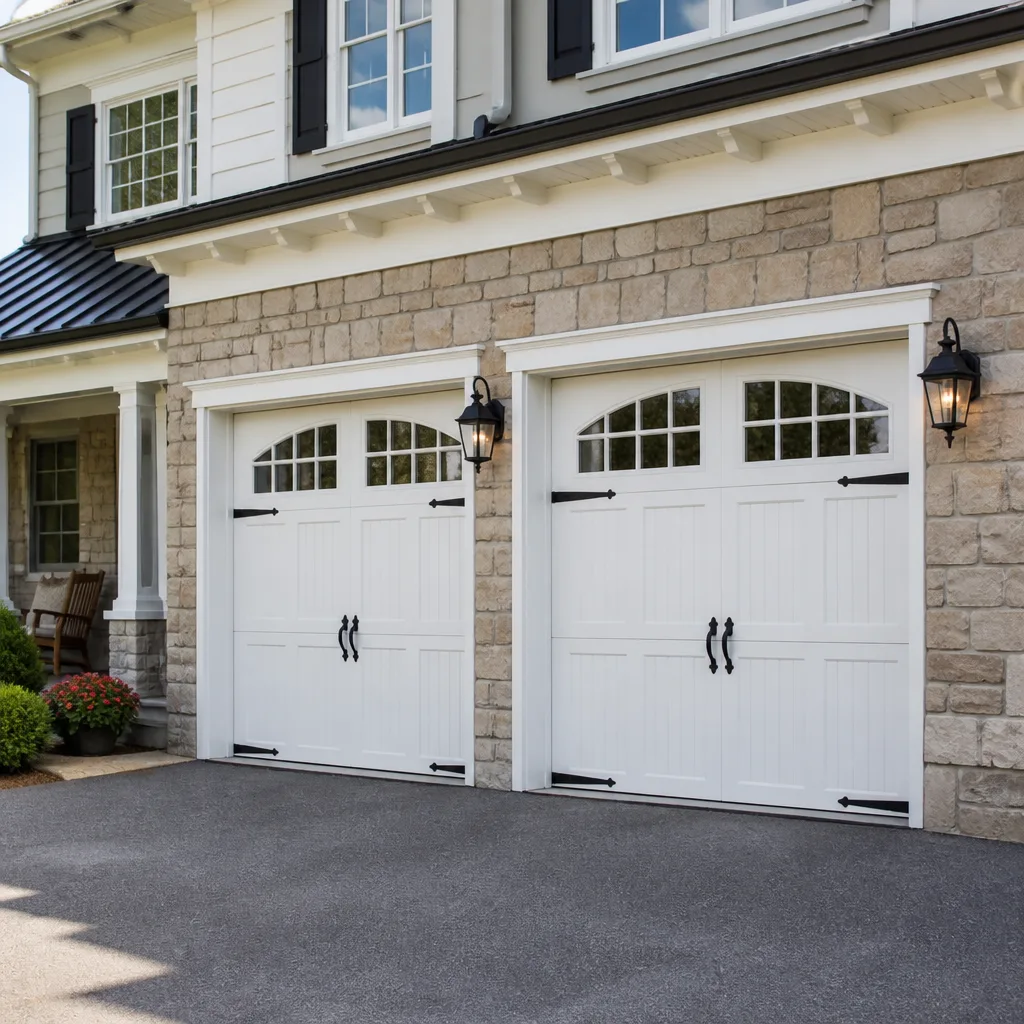 Carriage house
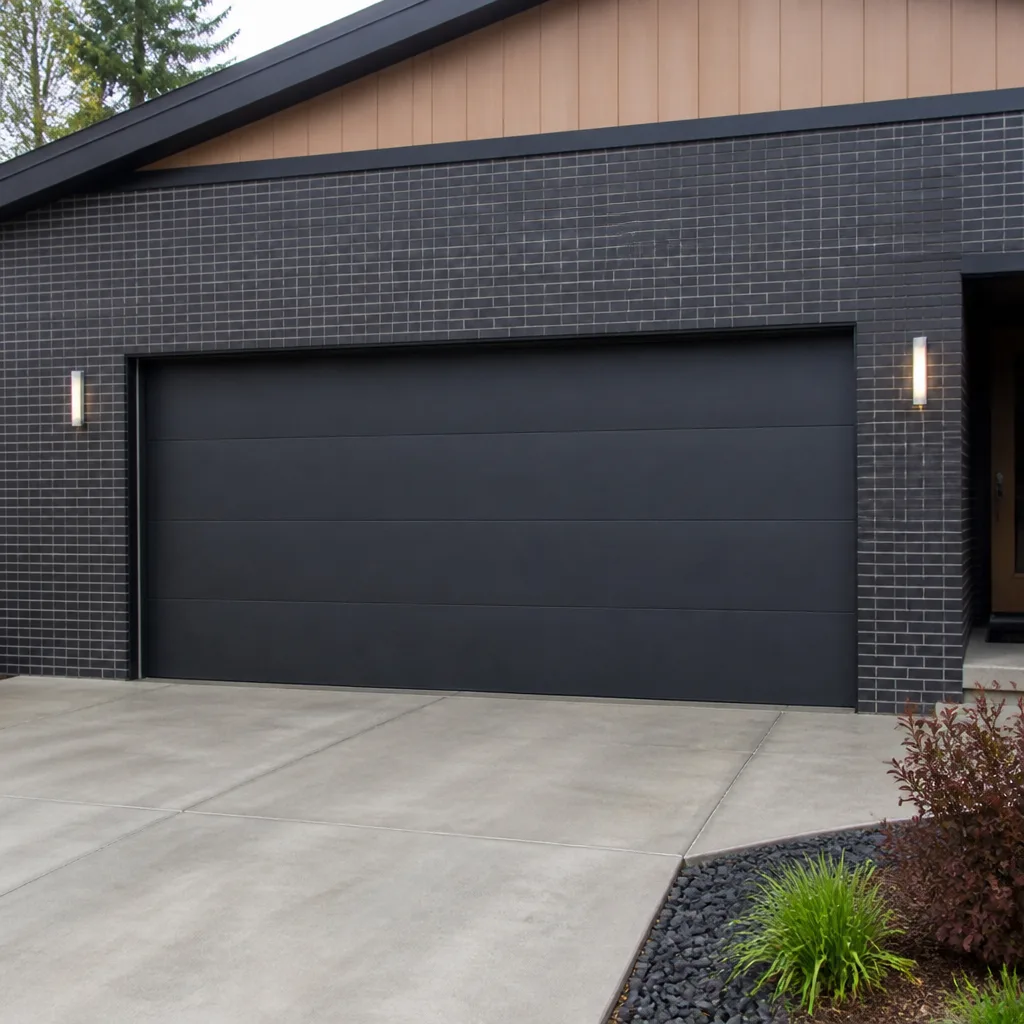 Modern flush
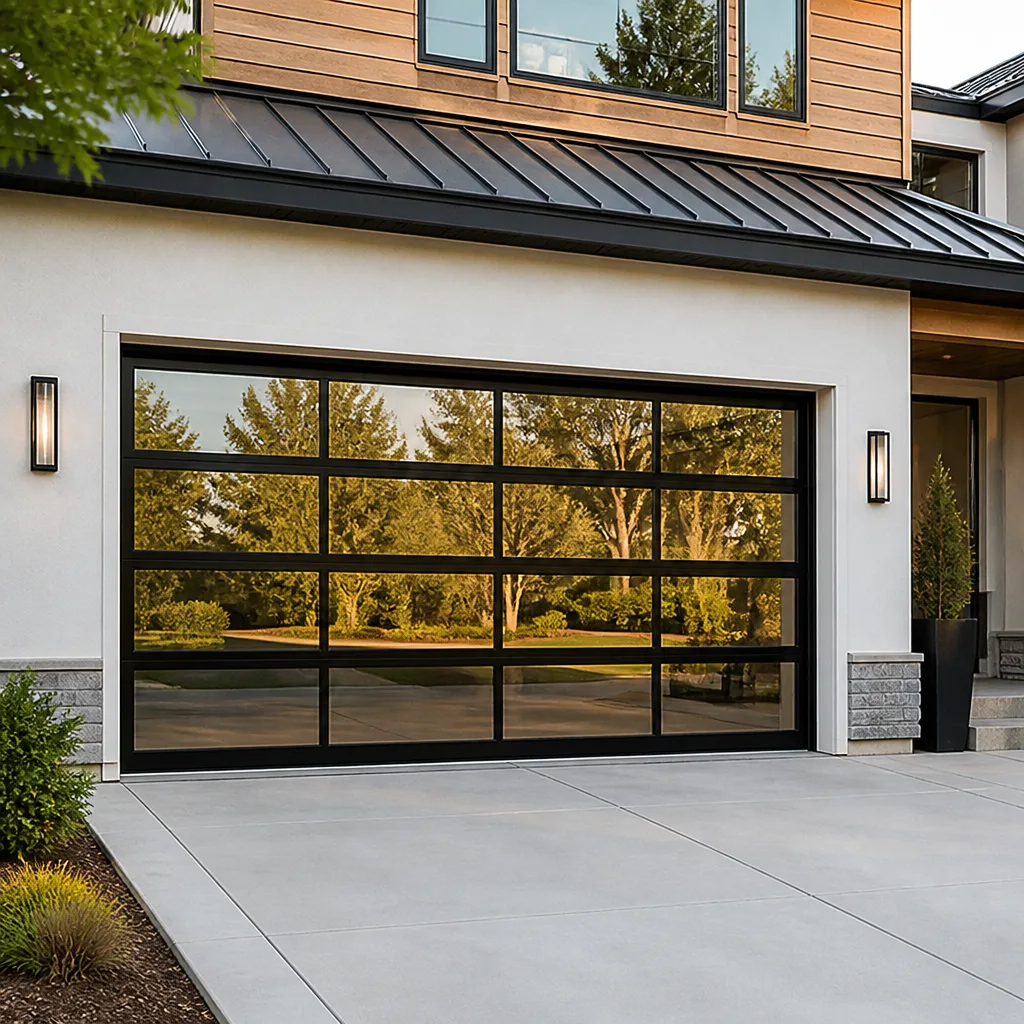 Full-view glass
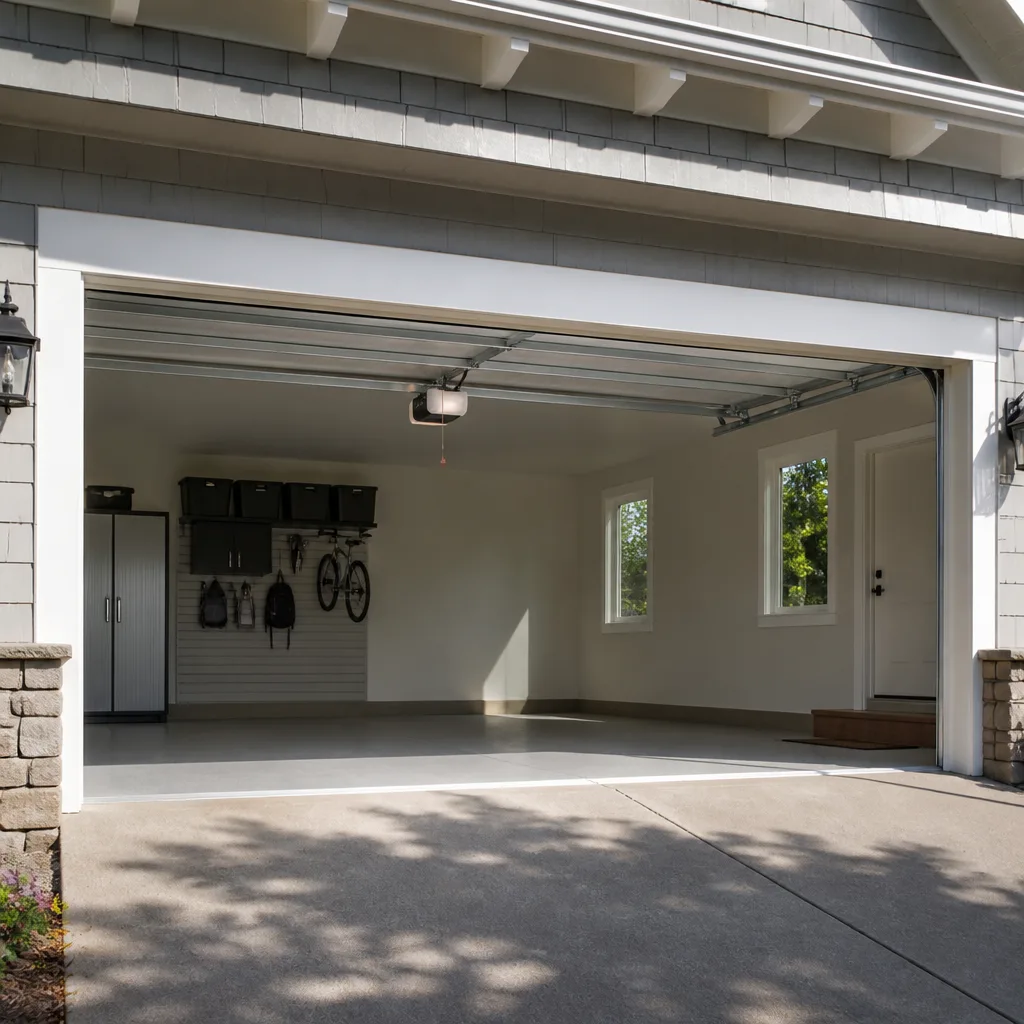 LiftMaster openers
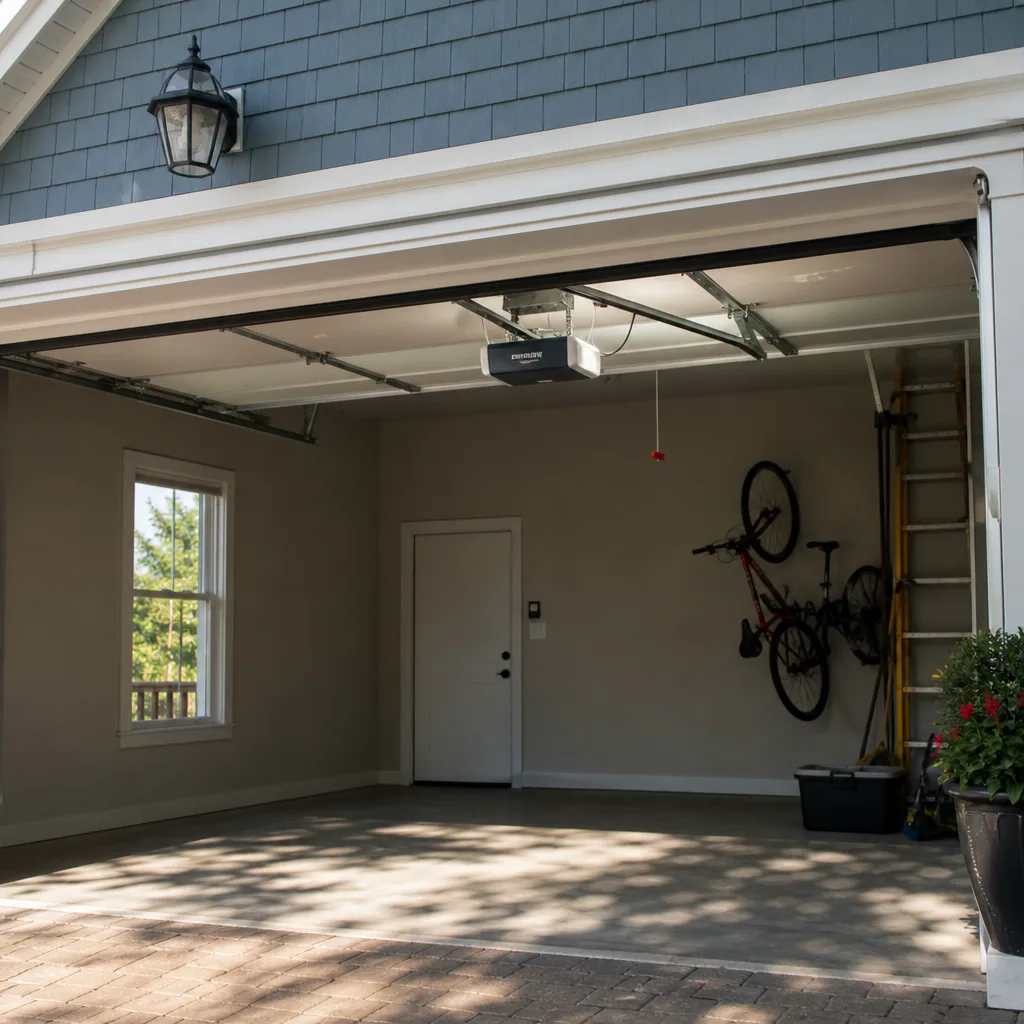 Chamberlain openers
Full 25-point door and opener safety check with every visit - springs, cables, rollers, tracks, and your LiftMaster or Chamberlain opener included
You get a price before we start. It does not change when the truck arrives.
Get your free estimateGarage Door Cost Breakdown: The Miami Homeowner’s Reference for 2026
Type “average garage door replacement cost” into Google and you’ll get a number that has nothing to do with Miami. The national figure floats around $1,200. In Miami-Dade County, a code-compliant, hurricane-rated door with permit starts several hundred dollars higher, and the gap isn’t markup. It’s code, materials, and labor conditions that national calculators never account for. This guide gives you real Miami numbers for 2026, line by line, so when you sit down with a quote, you’ll know exactly what you’re looking at and what’s missing. For garage door warning signs every Miami homeowner should watch for, see our companion guide.
Quick Answer
A garage door replacement in Miami typically costs between $1,800 and $4,500 fully installed with permit in 2026. The range breaks down as follows: $900 to $2,400 for the door panel itself (HVHZ-rated), $350 to $750 for labor, $150 to $350 for the permit, and $200 to $500 for hardware, tracks, and disposal. Garage door repair in Miami runs lower for single components: spring replacement typically costs $180 to $380, cable repair $150 to $275, and opener replacement $350 to $650 installed.
Styles & brands we work with
Table of Contents
- The 2026 Line-Item Cost Breakdown for a Miami Single-Car Door
- Why Miami-Dade Product Approval Doors Cost More (And What You’re Actually Paying For)
- The Permit Question: What Miami-Dade Charges and Why “We Handle It Free” Is a Red Flag
- How to Read a Quote for What It Omits: The Four Missing Line Items
- Fair-Price Benchmarks by Door Type for Miami, 2026
- Opener Replacement Costs: What Makes Sense and What Doesn’t
- Repair or Replace: The Honest Math for a Miami Door
- Three Miami-Specific Factors That Move the Price
The 2026 Line-Item Cost Breakdown for a Miami Single-Car Door
Let’s put real numbers on a standard job. A single-car garage door replacement in Miami, fully permitted and code-compliant, breaks down into six line items in 2026. Here’s the range you should expect on a written quote:
- Door panel (HVHZ-rated steel, 16′ x 7′): $900 to $1,600. This is the single biggest variable. A basic non-insulated steel panel starts at the low end; an insulated panel with a higher wind-load rating runs higher.
- Hardware and track kit: $150 to $350. Hinges, rollers, brackets, and the track system. Miami’s humidity means galvanized or coated hardware is worth the small premium.
- Torsion spring system: $120 to $250. The torsion spring, that thick coiled spring mounted above the door that bears most of the lifting load, is a separate line item on any honest quote. One spring is standard for a single-car door; two are common on heavier doors.
- Labor: $350 to $750. This covers removal of the old door, assembly, installation, balancing, and cleanup. Miami labor rates run higher than the national average because of demand and the specialized training required for HVHZ-rated installation.
- Permit: $150 to $350. Miami-Dade County charges a flat fee plus a surcharge based on door type and valuation. More on this below.
- Disposal: $75 to $150. Hauling the old door, tracks, and springs to a Miami-Dade approved facility.
Total range: $1,745 to $3,450 for a standard single-car replacement. A double-car door runs $2,400 to $4,800. These are not national averages. These are Miami numbers based on what we see on written quotes across the county every week.
Why Miami-Dade Product Approval Doors Cost More (And What You’re Actually Paying For)
Miami-Dade County sits in the High Velocity Hurricane Zone, the strictest wind-load building code in the United States. Any garage door installed here must carry a valid Miami-Dade County Product Approval, which means the manufacturer submitted the door to independent testing: wind-load pressure tests, impact resistance tests, and cyclic pressure testing that simulates a hurricane battering the structure for hours.
That testing costs money. The manufacturers who do it, Clopay, Amarr, Wayne Dalton, and Genie among them, build that cost into the door price. You’re not paying for a sticker. You’re paying for:
- Stronger panel construction: Thicker steel gauge, additional stiles, and reinforcement struts that a non-rated door doesn’t have.
- Heavier hardware: Hinges and brackets rated to hold the door in place under sustained wind pressure, not just during normal operation.
- Tested spring and track systems: Components sized and engineered to keep the door in its tracks when wind loads push against it from outside.
The price difference between a non-rated door and a Miami-Dade approved door on the same size opening is typically $400 to $900. A contractor who quotes you a non-rated door for a Miami installation is either ignorant of county code or planning to cut a corner you’ll discover at the next inspection or worse, during the next storm.
The Permit Question: What Miami-Dade Charges and Why “We Handle It Free” Is a Red Flag
Garage door replacement in Miami-Dade requires a permit. The fee structure in 2026 runs $150 to $350 for a standard residential door, depending on the door’s valuation and whether the job includes an opener. Some municipalities within the county, like Coral Gables or Miami Beach, layer their own fees on top.
Here’s the thing about a contractor who says they’ll “handle the permit for free.” The permit fee is a county charge. Nobody waives it. What “free permit handling” actually means is one of two things: either they’re not pulling a permit at all (the most common case), or they’re rolling the permit cost into another line item so it looks like you got something extra.
A permit is not a favor. It’s a legal requirement that puts an independent inspector’s eyes on the installation. It verifies the door is Miami-Dade approved, properly anchored, and code-compliant. If a contractor suggests skipping it to save money, you’re not saving money. You’re accepting liability for an unpermitted structural modification, which becomes a problem at resale and with your insurer.
Look for the permit as a separate line item on the quote. A contractor who itemizes it is the contractor who isn’t hiding things elsewhere.
How to Read a Quote for What It Omits: The Four Missing Line Items
Low-ball quotes work because they leave things out. The number looks good on the phone, then the line items get added back once the door is off the tracks and you’re committed. Here are the four omissions we see most often when Miami homeowners bring us quotes from cheaper competitors:
- The permit. Omitted from the quote, then presented as a “surprise fee” after the old door is removed. That $150 to $350 line item appears on the invoice regardless. You’ll pay it either way; the only question is whether you knew before work started.
- The spring system. Some quotes price only the door panel and hardware, then “discover” that the existing springs are the wrong size or too worn to reuse. Correct springs for an HVHZ-rated door run $120 to $250. That’s a mid-job add-on that could have been on the original quote.
- Disposal. The old door, tracks, and springs have to go somewhere. A quote that doesn’t include disposal either buries the cost elsewhere or leaves you with a pile of steel in your driveway.
- Reinforcement struts. Miami-Dade code requires struts on doors over a certain width and wind-load rating. If the quoted door doesn’t include them and the job is a wide double door, expect a change order.
When you compare quotes, compare line items, not bottom lines. A $2,100 quote with all six line items itemized is more honest than a $1,700 quote missing the permit, disposal, and correct springs.
Fair-Price Benchmarks by Door Type for Miami, 2026
Here’s the table we’d want as a homeowner. Installed prices include labor, hardware, permit, and disposal, for a fully code-compliant Miami-Dade approved installation:
| Door Type | Single-Car Installed | Double-Car Installed | Notes |
|---|---|---|---|
| Single steel, non-insulated | $1,800 to $2,400 | $2,400 to $3,200 | Budget option; gets warm in Miami sun |
| Single steel, insulated | $2,200 to $2,900 | $2,800 to $3,800 | Better thermal performance for attached garages |
| Aluminum full-view | $2,800 to $3,800 | $3,500 to $5,000 | Popular in Coral Gables and coastal neighborhoods; corrosion-resistant |
| Wood-look composite | $2,600 to $3,600 | $3,400 to $4,800 | Amarr and Clopay both make solid options; resists humidity better than real wood |
Real wood doors exist in Miami but we rarely recommend them. The humidity and salt air warp them within a few seasons unless they’re religiously maintained. Composite gives you the look without the maintenance cycle.
These ranges assume a standard 16′ x 7′ opening for a single door and 16′ x 8′ or 18′ x 7′ for a double. Custom sizes, high-lift tracks, or doors over 8 feet tall push the price up from there.
Opener Replacement Costs: What Makes Sense and What Doesn’t
If the door itself is fine but the opener has failed, you’re looking at a different job. Garage door opener repair in Miami typically runs $125 to $250 when it’s a gear kit, logic board, or sensor issue. Full opener replacement with a new unit runs $350 to $650 installed.
The variable is the unit itself. A basic chain-drive opener starts around $200. A belt-drive unit from Genie or Chamberlain runs $300 to $450 for the hardware alone. Smart openers with battery backup, which matters in Miami where storms knock out power regularly, add $100 to $200.
One note on Miami specifically: if your garage door faces south or west in an unshaded location, the opener’s logic board bakes in the heat. We replace more logic boards in Doral and Kendall than almost anywhere else we work. A belt-drive unit with a metal-reinforced chassis holds up better than a plastic housing under that kind of sun load.
Repair or Replace: The Honest Math for a Miami Door
A 2026 Miami homeowner with a failing door typically faces one of three scenarios, and the math differs for each.
Single component failure: A broken torsion spring or snapped cable on a door that’s otherwise in good shape. Garage door cable repair in Miami runs $150 to $275 including the service call. Spring replacement runs $180 to $380. If the door is under 12 years old and the panels aren’t rusted or dented, repair is the obvious call. Fix the component, keep the door.
Multiple components wearing out together: Springs, cables, and rollers all showing age, but the panels are solid. A full hardware refresh, springs, cables, rollers, hinges, and brackets, runs $400 to $700. That buys you another several years on a door that still has life in its panels.
Panel damage or door over 15 years old: If the bottom panel is rusted through from salt air or the door predates current HVHZ codes, replacement is the better money. A door installed before Miami-Dade tightened wind-load requirements isn’t just worn; it’s below current code. Spending $700 on hardware for a door that doesn’t meet code is money spent improving the wrong thing.
Three Miami-Specific Factors That Move the Price
National cost guides miss what every Miami contractor knows. Three local conditions move the numbers here and nowhere else.
1. Salt Air Corrosion
Homes within a few miles of Biscayne Bay deal with salt in the air. It eats springs, corrodes hardware, and pits steel panels. Coastal installs in neighborhoods like Key Biscayne, Coconut Grove, and Surfside should spec galvanized hardware and corrosion-resistant springs from the start. That’s a $100 to $200 line item that a non-coastal Miami quote won’t include. If you’re near the water, ask for it.
2. The Heat Load on Openers
Garage door openers in Miami run hot. Attached garages here routinely exceed 110 degrees in the summer. The plastic gears inside a cheap opener will strip sooner than they would in a cooler climate. A metal-gear opener or a belt-drive unit with a DC motor runs cooler and lasts longer. The $100 to $150 premium over a base chain-drive unit is cheaper than replacing the opener twice in seven years.
3. Wind-Load Requirements Beyond the Basics
Miami-Dade’s wind-load map isn’t uniform, even within the county. Homes closer to the coast face higher design wind speeds than homes inland. A door that’s approved for a 140 mph wind zone may need additional reinforcement, struts, or a heavier track system for a 170 mph zone. The difference on a double door can be $300 to $600. A contractor who quotes one price for “a Miami-Dade approved door” without checking your specific wind zone is guessing. The right contractor checks the address against the county map before quoting.
Common Mistakes to Avoid
- Assuming the national average applies here. Miami prices run higher because Miami codes are stricter. If a quote matches the national average exactly, ask which line items are missing.
- Acquiescing to a non-permitted job. An unpermitted garage door replacement is a liability at resale and a possible insurance denial if the door fails during a storm.
- Comparing bottom lines without comparing line items. The honest quote has six line items. The low-ball quote has three and adds the rest later.
- Replacing a door when a component repair would do. A $200 spring replacement on a 10-year-old door is almost always the right call. Don’t let anyone talk you into a $2,500 replacement you don’t need.
- Choosing a non-rated door for a coastal location. A door without a Miami-Dade Product Approval isn’t just non-compliant; it’s dangerous in a storm. A door that fails under wind pressure becomes a missile inside your garage.
- Ignoring the opener when replacing the door. If the opener is 10 years old and the door is being replaced, swapping the opener at the same time costs less than a separate visit later.
- Hiring on speed instead of written scope. The crew that can come “right now” without a written price is the crew that changes the number after the old door is off.
See the difference
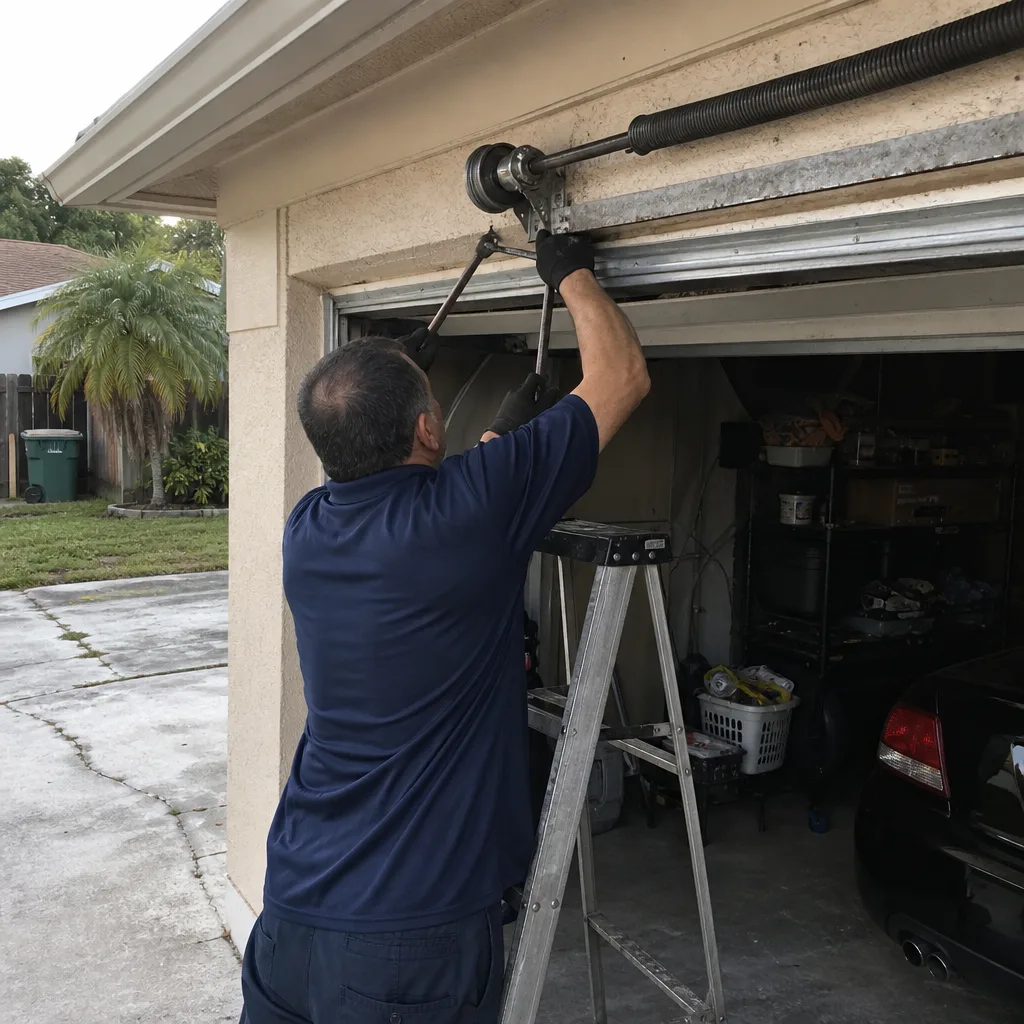 Before
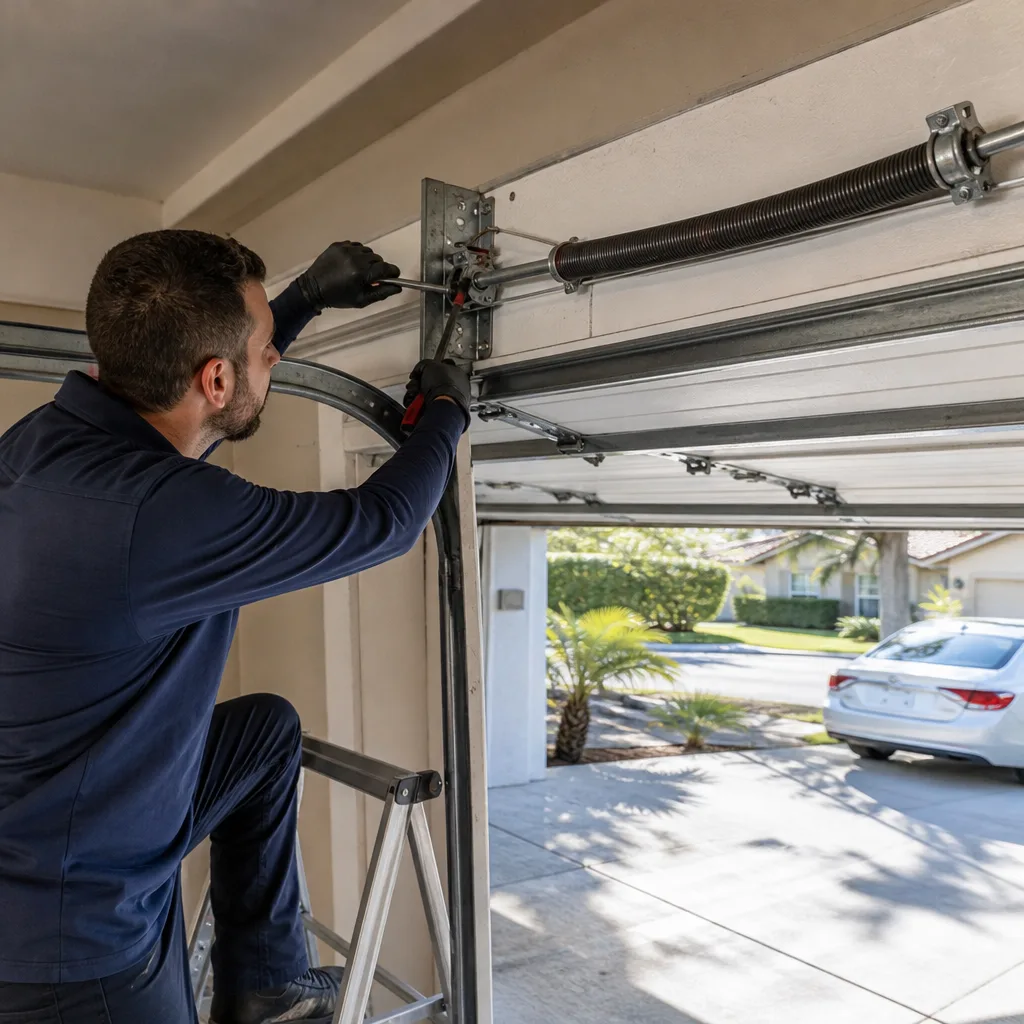 After
After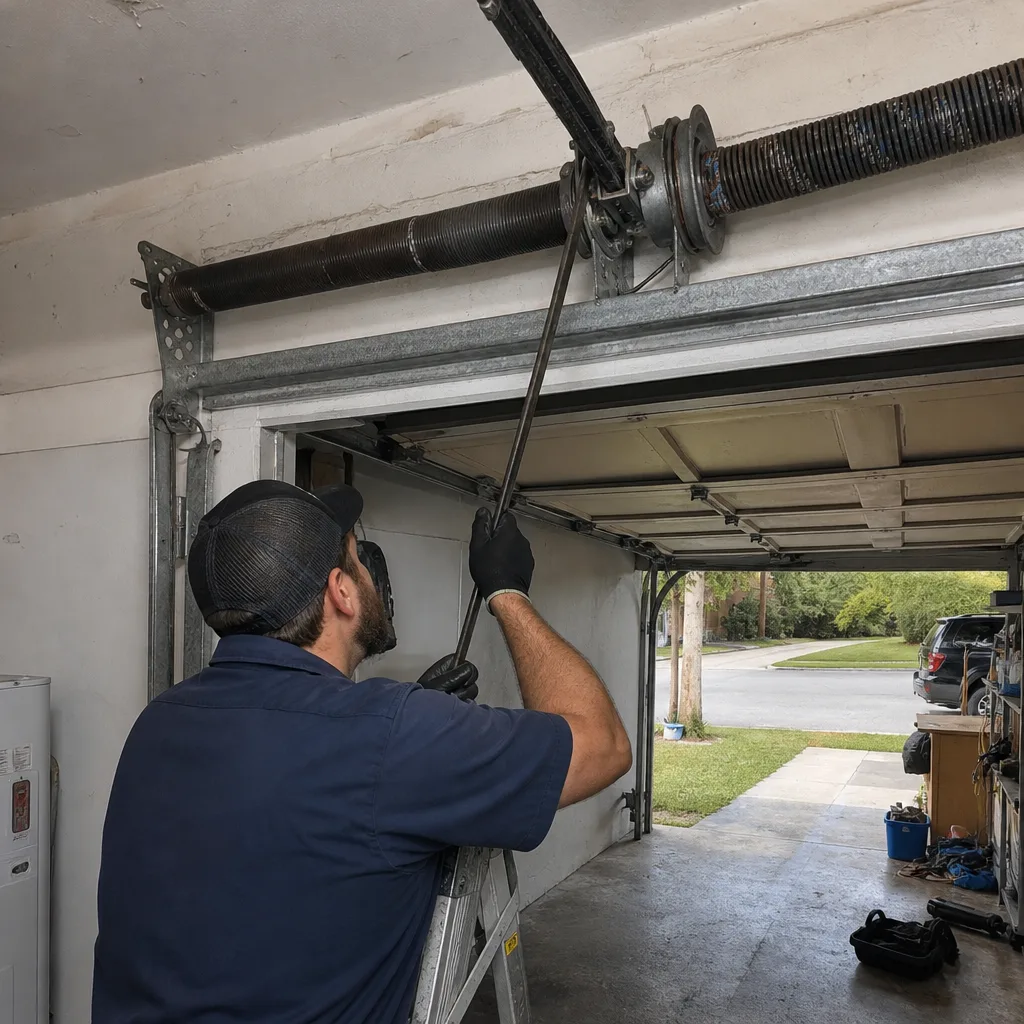 Before
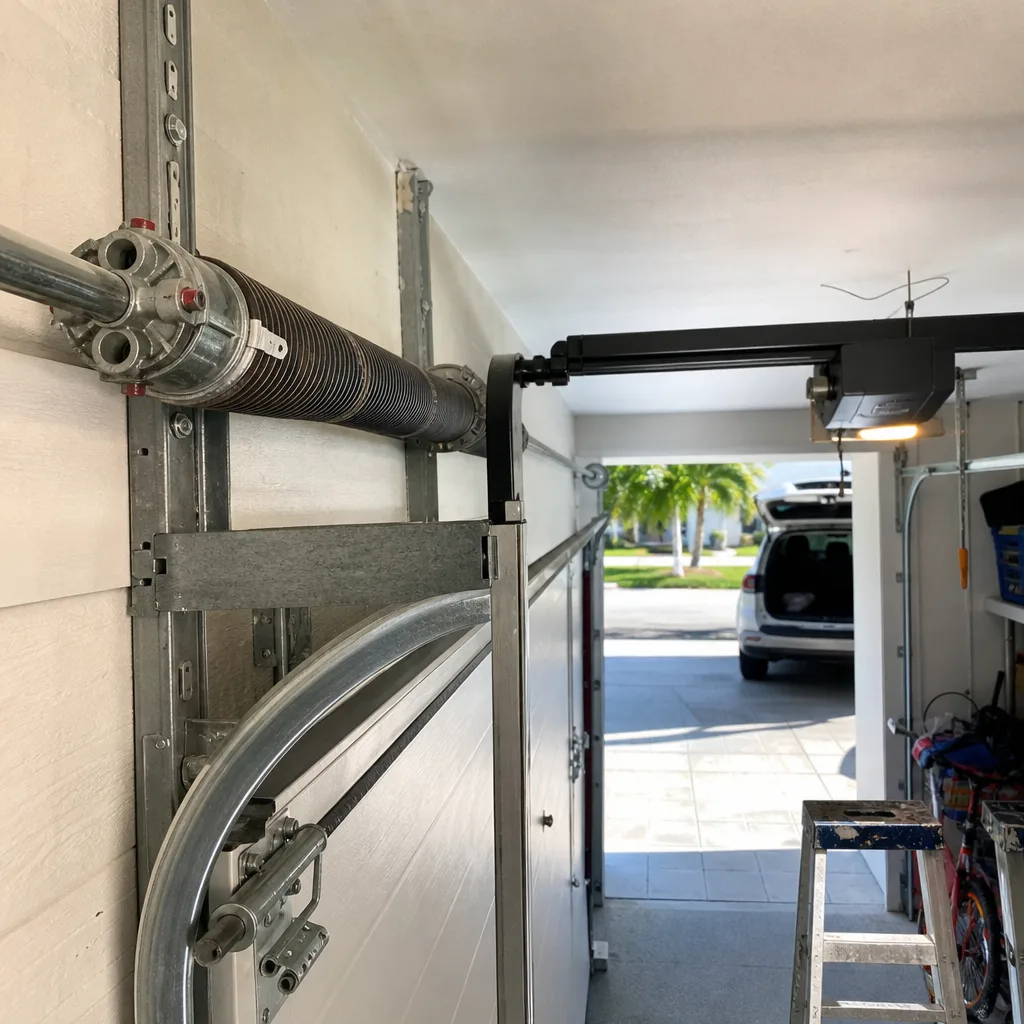 After
After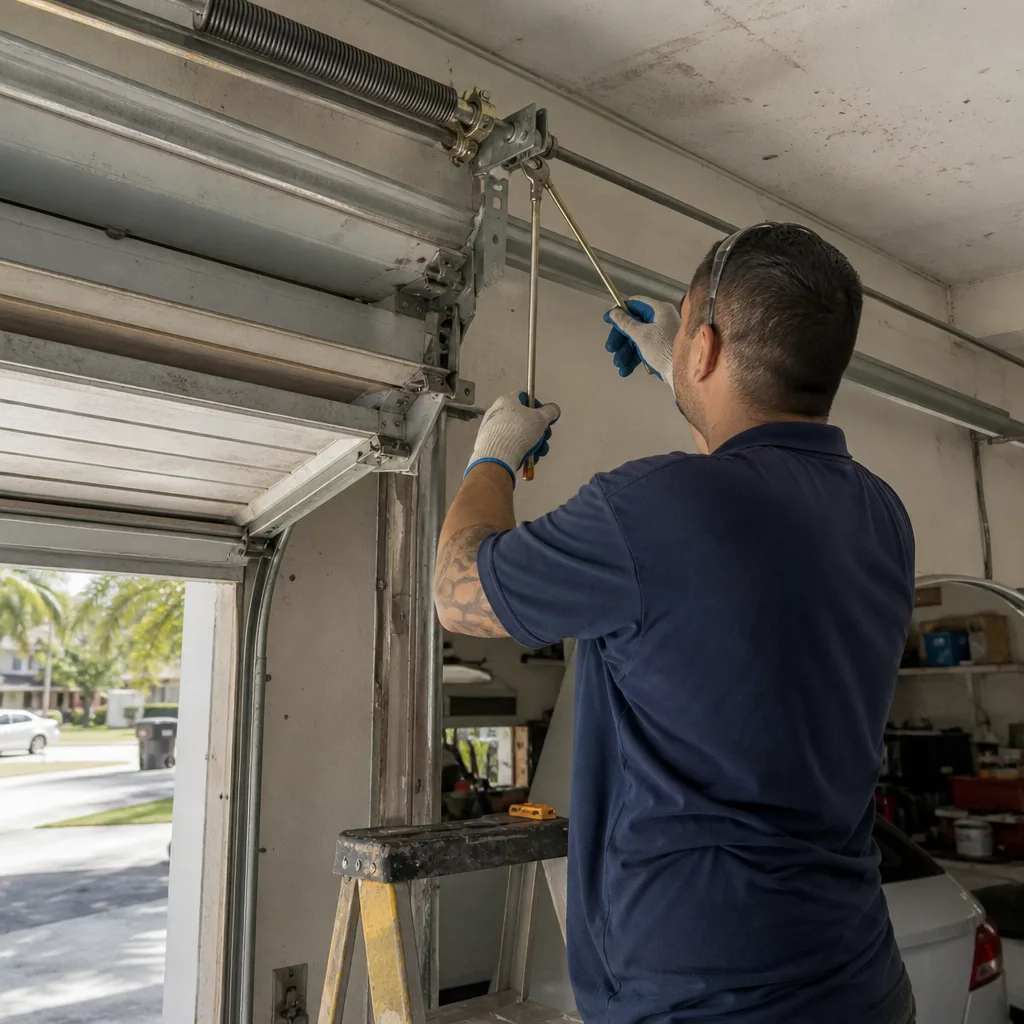 Before
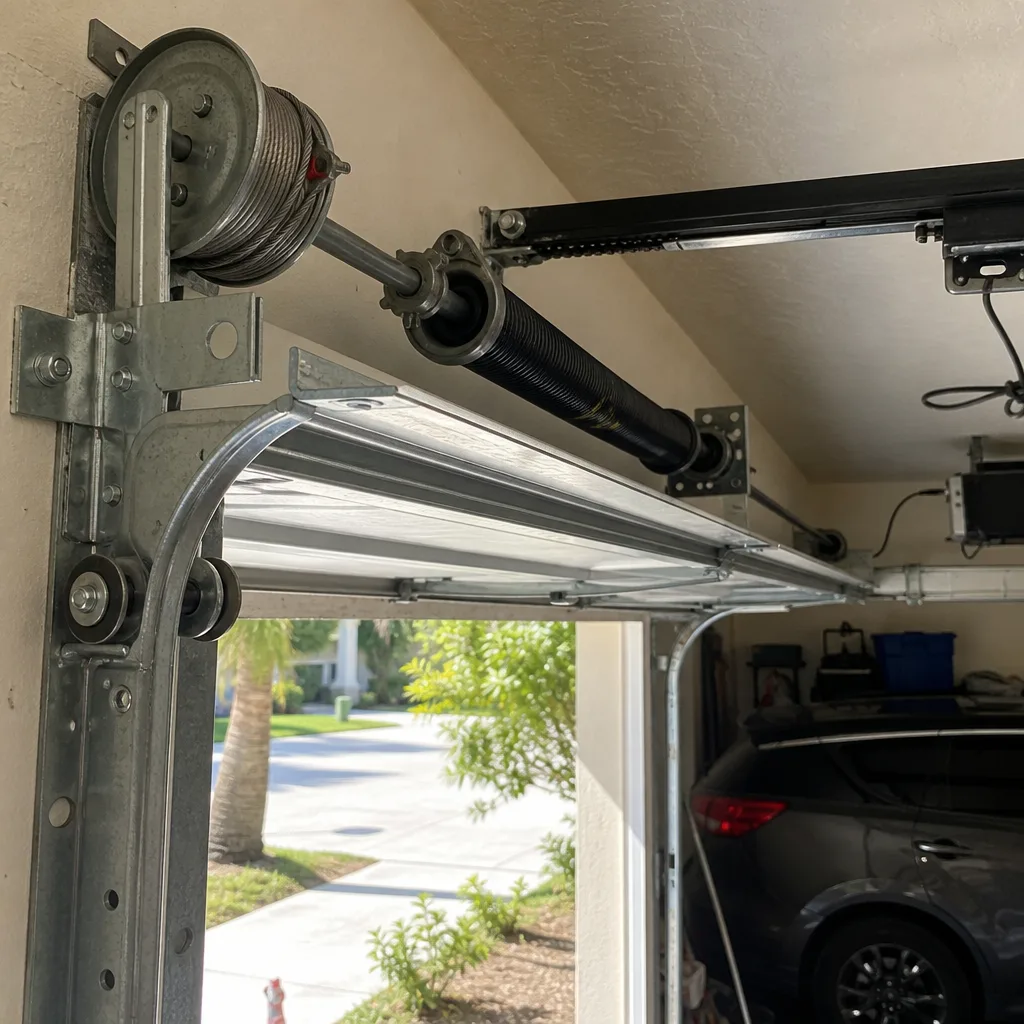 After
AfterWhen to Call a Professional
Some things on a garage door are safe to address yourself: tightening a loose handle, clearing debris from the photo-eye sensors, oiling the rollers. The spring system is not one of those things. Torsion springs hold enormous tension, enough to cause serious injury if they snap or release while you’re working on them. Cable replacement carries the same risk; a cable under load can whip if it slips. If the spring has snapped, the cable has frayed, or the door has come off its tracks, that’s a trained-technician job with proper winding bars and a torque-controlled procedure. If the door doesn’t move smoothly under opener power, or if you hear a bang from the spring area, don’t force it. Call someone who works on this every day. Brock Garage Doors Miami offers free estimates in Miami, call (850) 403-9654 and a real person answers any time, day or night.
Frequently Asked Questions
A single-car garage door replacement in Miami runs $1,800 to $3,450 fully installed with permit, and a double-car door runs $2,400 to $4,800. The total depends on door type, wind-load rating, and your specific location within the county. Call (850) 403-9654 for a written quote on your exact door.
Miami-Dade County requires every garage door to carry a Product Approval for the High Velocity Hurricane Zone, which means the door was independently tested for wind resistance and impact. That testing, plus the heavier materials required to pass it, adds $400 to $900 over a non-rated door.
Yes. Miami-Dade County requires a permit for garage door replacement. The permit fee runs $150 to $350 depending on door valuation and whether the job includes an opener. A written quote should itemize the permit as a separate line.
Spring replacement in Miami runs $180 to $380 including the service call, depending on spring type and whether one or two springs are needed. Your repair is covered in writing for 365 days, if it fails in that window, we return at no charge.
You can, but you shouldn’t. A non-rated door installed in Miami is a code violation, a potential insurance denial, and a genuine safety hazard if it fails during a storm. The upfront savings get eaten by liability later.
The door itself is the same price from any contractor buying from the same manufacturer. The difference is in what’s included: permit, disposal, correct springs, reinforcement struts, and labor. Compare line items on written quotes and the differences explain themselves. Estimates from Brock Garage Doors Miami are free, call (850) 403-9654.
The Bottom Line
Miami garage door pricing has a logic to it. The code is stricter here than anywhere else in the country, the materials are heavier, and the permit is mandatory. A fair 2026 price for a single-car replacement sits between $1,800 and $3,450 with everything included. Anything far below that number is missing something. The job is to figure out what. Read the quote line by line. Ask about the permit. Confirm the door carries a Miami-Dade Product Approval. And get the price in writing before the old door comes off the tracks. If a contractor won’t do that, call one who will. Brock Garage Doors Miami has been doing it that way since 2001.
Written by Wade Mercer, Owner at Brock Garage Doors Miami, serving Miami since 2001. Browse more guides & resources from our team.