
Last updated October 16, 2026
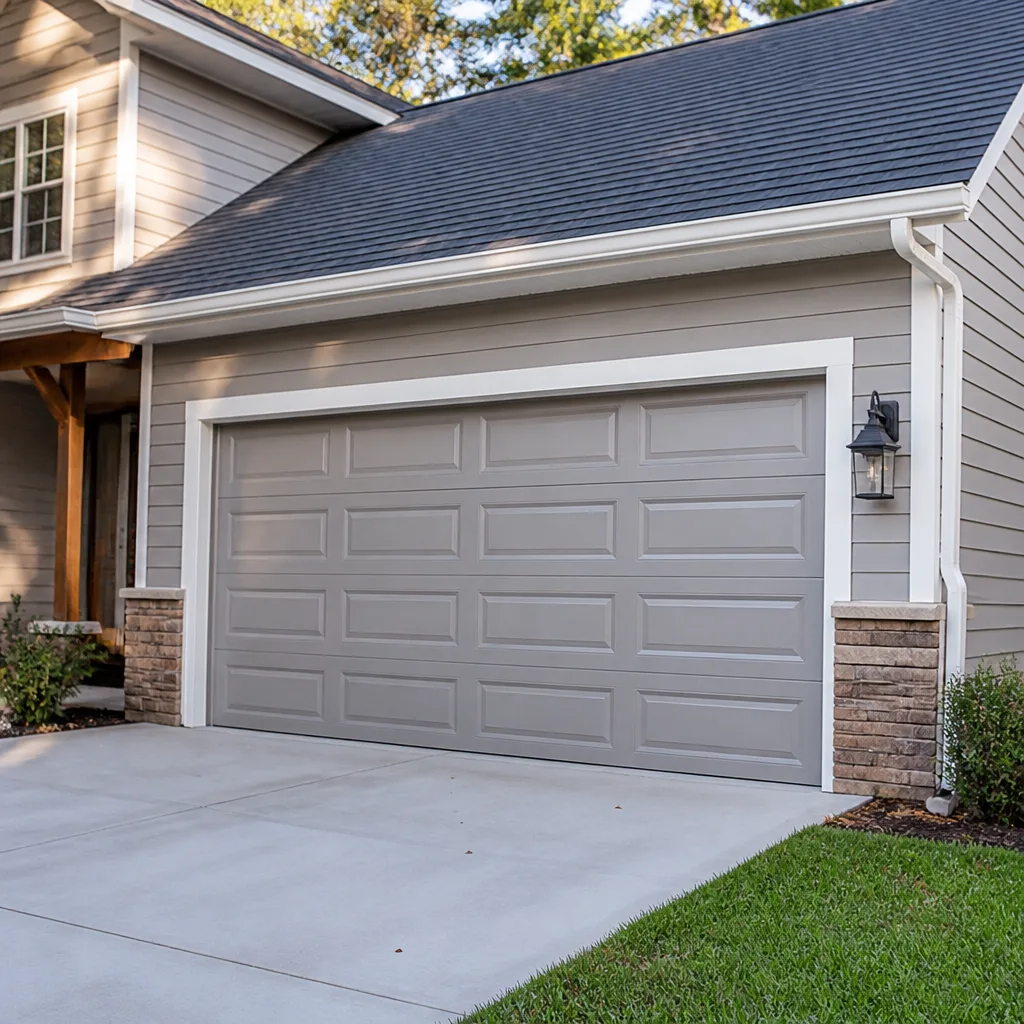 Raised-panel steel
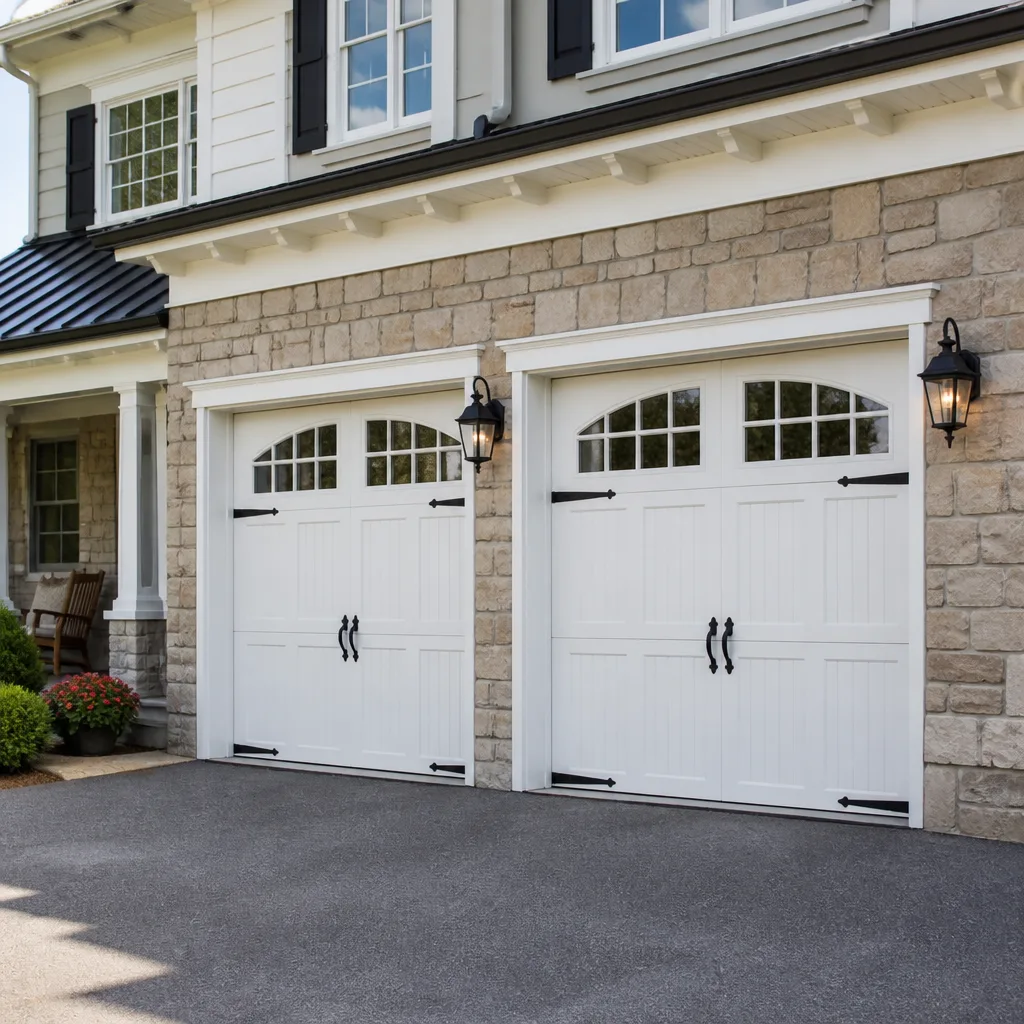 Carriage house
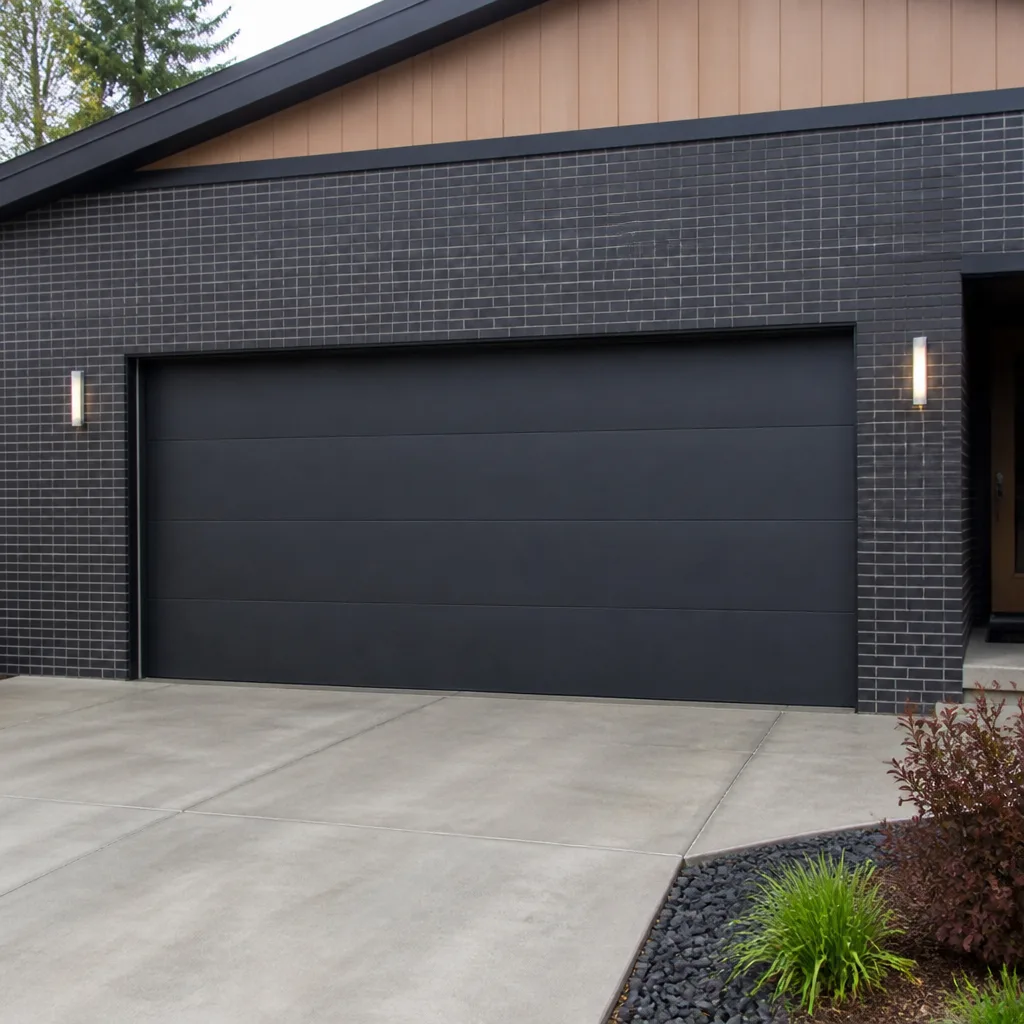 Modern flush
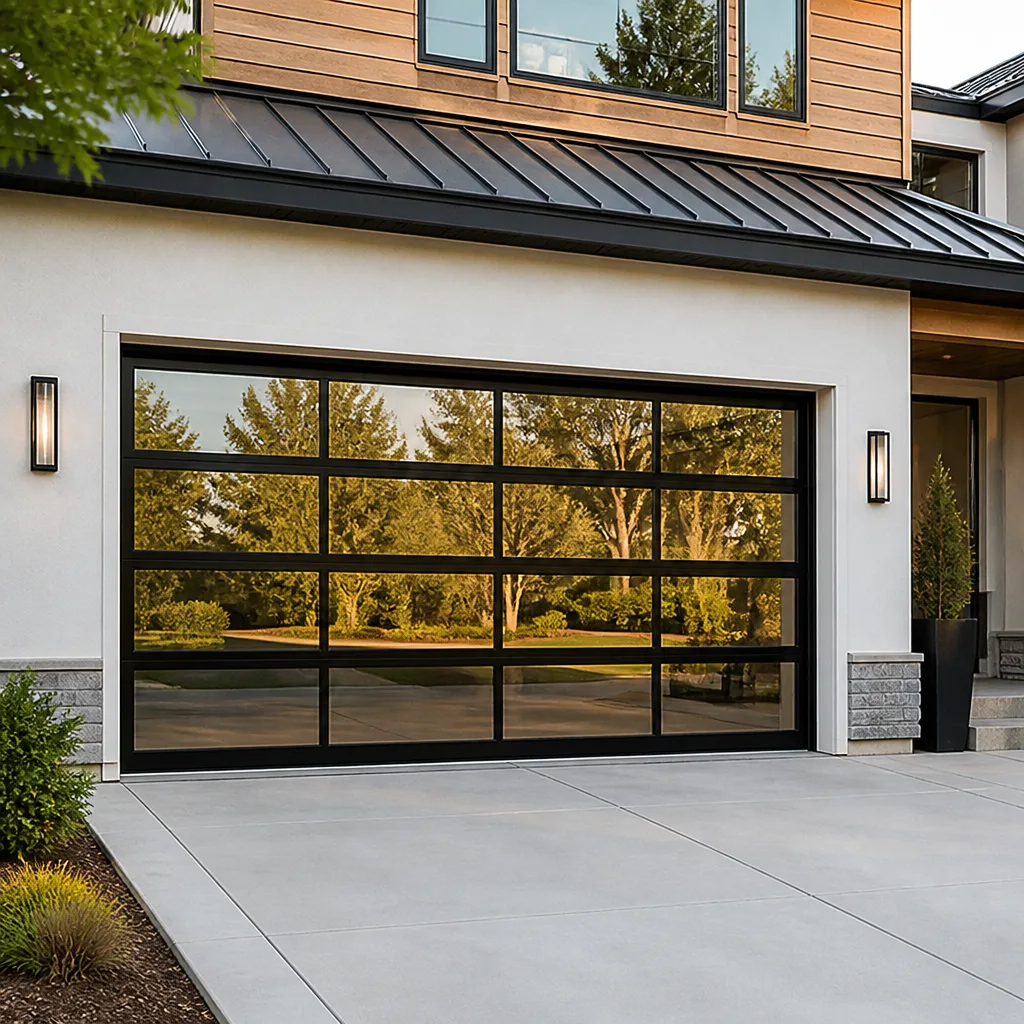 Full-view glass
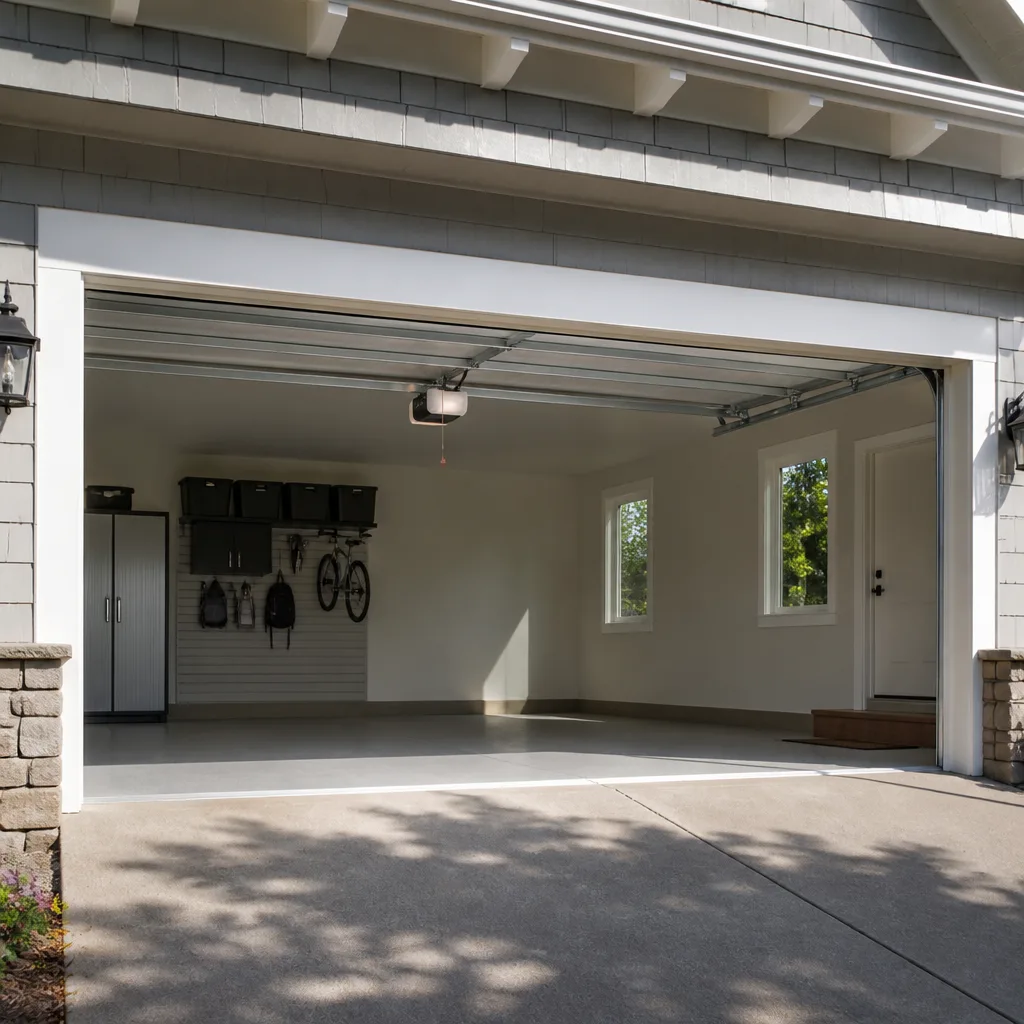 LiftMaster openers
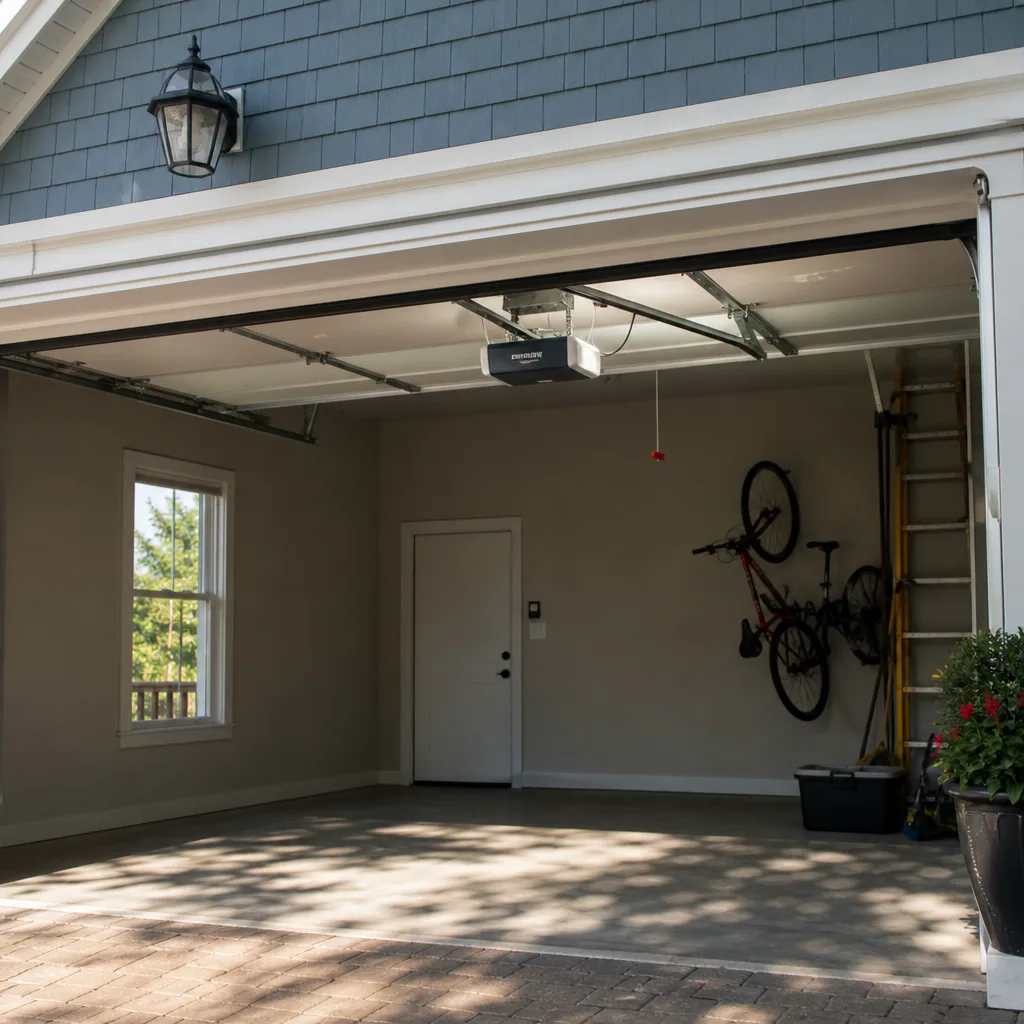 Chamberlain openers
Full 25-point door and opener safety check with every visit - springs, cables, rollers, tracks, and your LiftMaster or Chamberlain opener included
You get a price before we start. It does not change when the truck arrives.
Get your free estimateGarage Door Warning Signs: A Miami Homeowner’s Reference Guide
A grinding noise and a scraping noise are not the same problem. One is usually a lubrication issue that costs less than a service call to address. The other can be a cable failing under tension, which is a structural hazard that gets worse every time the door moves. Most homeowners can’t tell the two apart because most guides describe garage door problems in terms of components: “torsion spring failure,” “cable wear,” “track misalignment.” That’s backwards. You can’t see a torsion spring without going into the garage and looking up. What you can do is hear, watch, and feel what the door is doing. This guide works from what you observe first. We’ll walk through the specific sounds, movements, and visible changes that signal real trouble in a Miami garage door, what each one indicates mechanically, and whether you need to act today or can monitor it for a few weeks. Coastal humidity, salt air, and year-round heat change how garage doors fail here, and we’ll cover those failure patterns too.
Quick Answer: The most serious garage door warning signs in Miami are cable fraying (visible as loose wire strands near the bottom brackets), a door that rises unevenly or jerks mid-travel, and a grinding sound from the spring area. Any of these three means stop using the door and call a technician. Noises alone, without visible damage or movement changes, are usually lubrication or balance issues that can wait a few days. A door that won’t open at all, especially after a loud snap, indicates a broken spring.
Styles & brands we work with
Table of Contents
- What Each Sound Actually Means
- Movement Changes That Signal Trouble
- Visual Warning Signs You Can See Without a Ladder
- Why Miami Doors Fail Differently
- Three Signs You Need to Shut the Door Down Now
- How to Disengage the Opener Safely
- New Installation Noises: Normal vs. Misaligned
- Photo Documentation for Warranty Claims and Phone Estimates
- Common Mistakes to Avoid
- When to Call a Professional
- Frequently Asked Questions
- The Bottom Line
What Each Sound Actually Means
Most garage door noises get lumped together as “grinding” or “squeaking” in homeowner descriptions. Those words are too vague to tell you anything. The pitch, rhythm, and location of the sound are what matter. Here’s a symptom-to-cause index organized by what you actually hear.
Squeaking or squealing during travel
A high-pitched, consistent squeak that tracks with the door’s movement almost always points to dry metal-on-metal contact. On a Miami garage door, the usual culprits are the rollers moving inside the track, or the hinges connecting the panels. Humidity accelerates surface rust on hinge pins and roller bearings here, and once rust starts, the squeak becomes a wear problem. Lubricating the hinges, rollers, and track with a garage-door-specific lubricant often resolves it. If the squeak persists after lubrication, the roller bearings themselves are worn and should be replaced. Don’t ignore a persistent squeak: a seized roller will eventually chew up the track, and track replacement is significantly more expensive than roller replacement.
Grinding from the center of the door
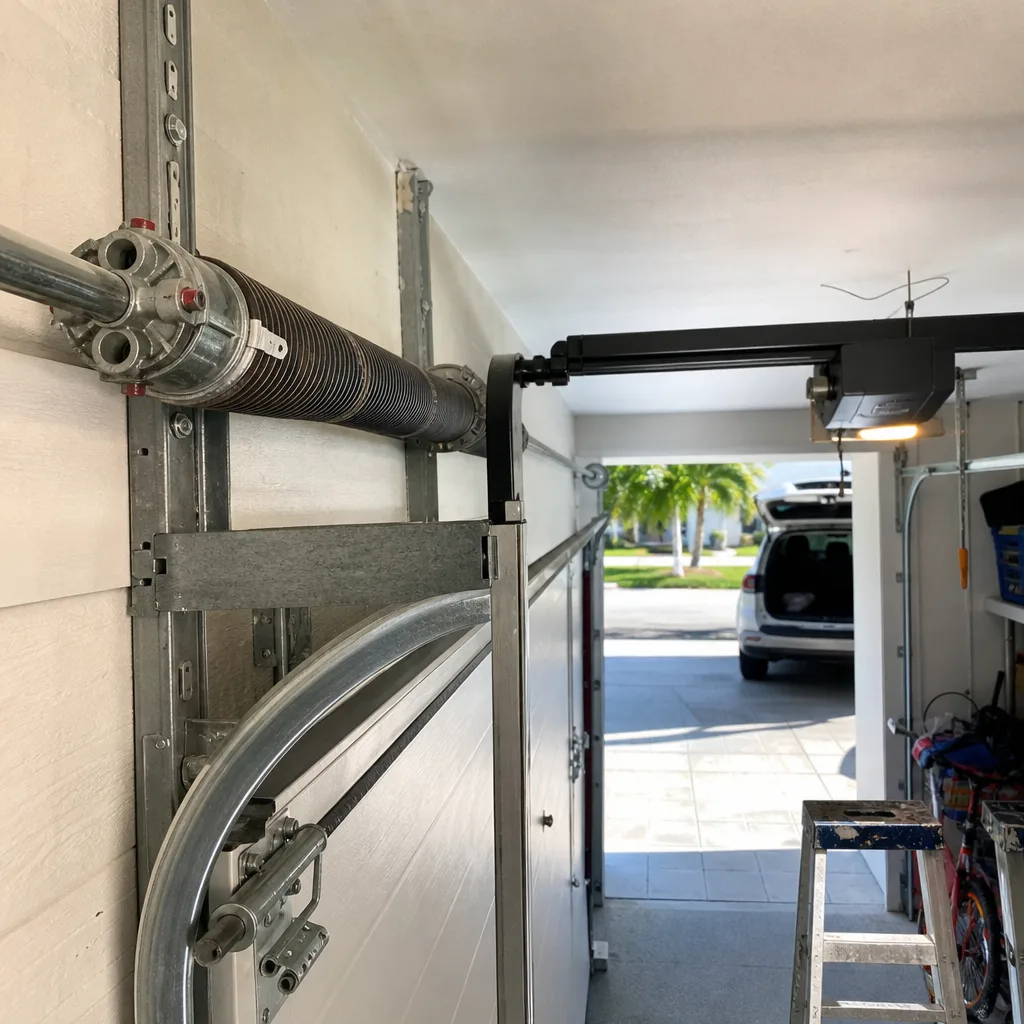
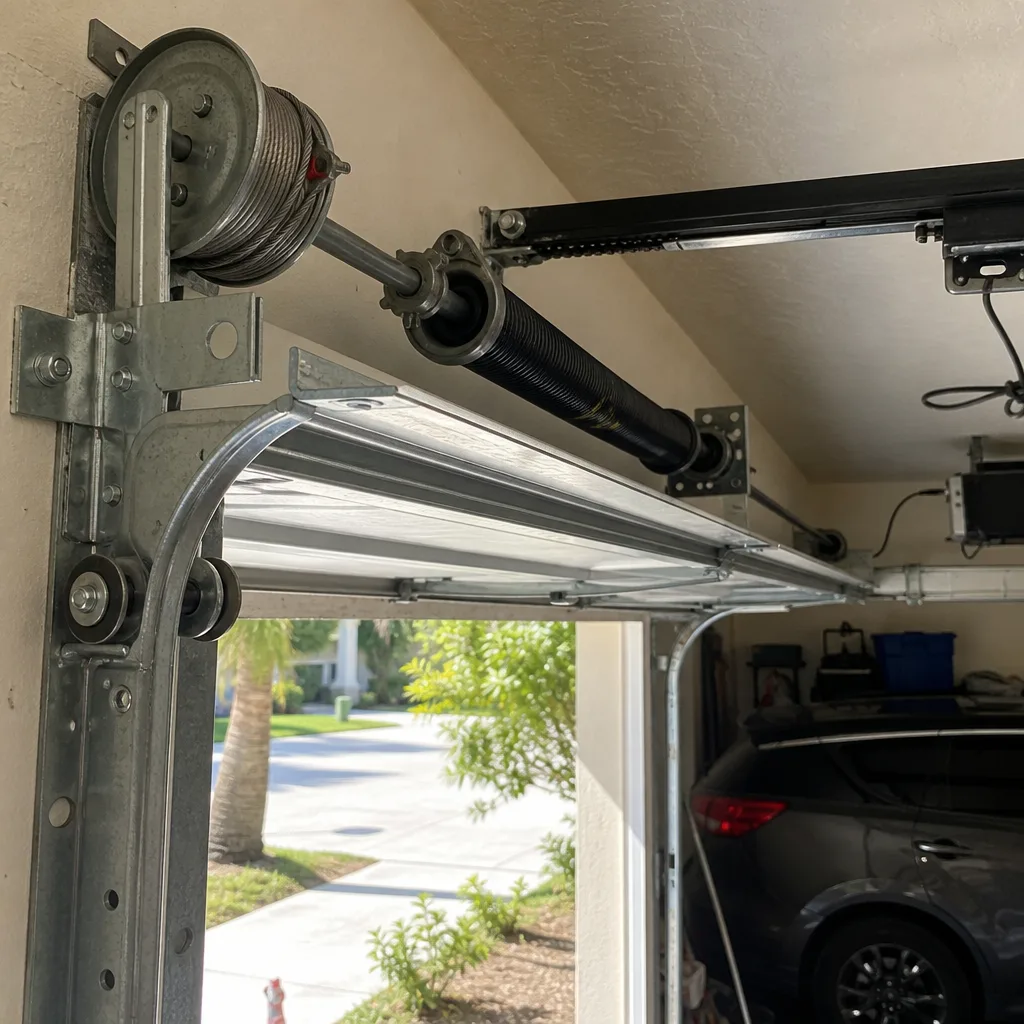
A grinding noise coming from the spring assembly area, roughly center of the door above the opening, is different from a squeak. It’s usually lower-pitched and sounds like metal complaining under pressure. This often indicates the torsion spring is nearing the end of its usable life. Torsion springs are the thick coiled springs mounted above the door that counterbalance most of the weight. They’re rated for a number of cycles, and when they start to fail, the coils can rub and grind. A grinding spring is a warning sign that a failure is coming, not an immediate one, but it shouldn’t be ignored. In our experience across Miami, a grinding torsion spring usually has weeks to months left, not years. Call for an inspection before it snaps.
Bang or pop when the door opens or closes
A single loud bang or pop during travel usually means the door is catching and releasing somewhere. The most common cause is a track that’s slightly misaligned, causing a roller to jump a small irregularity. Another cause is a section hinge that’s loose, letting two panels shift independently and snap back. Both issues are repairable, but both get worse with use. A rhythmic banging that happens at roughly the same point in the travel each cycle points to a bent track or a damaged panel edge. That specific location where the noise happens is diagnostic information; note it and tell the technician.
Rattling when the door is closed and stationary
If the door rattles in the closed position, especially when wind hits it, inspect the weather stripping and the panel-to-panel connections. In Miami’s wind exposure, loose hardware develops faster than in protected inland locations. Check for loose hinge bolts and screws at the panel joints. Rattling from the opener unit itself, high above the floor, often means the mounting bolts have loosened. A rattling open-motor is an easy fix if addressed early and a dropped unit if ignored.
The sound of wire slipping, or a sudden snap
A loud snap followed by the door refusing to move, or moving only a few inches, is a broken torsion spring. It sounds like a gunshot or a heavy cable under tension suddenly releasing. Stop using the door immediately and leave the opener disengaged. The door is now too heavy to move safely by hand, and the opener motor is not designed to lift it alone. Call for garage door repair in Miami the same day. A broken spring won’t fix itself, and continuing to use the opener will damage the motor and gears.
If you’re hearing any of these, the sound itself tells you more than “something’s wrong.” Note when it happens, what it sounds like (squeak, grind, bang, rattle, snap), and whether it’s consistent. That description will let a technician arrive with the right parts. Our Miami garage door team has the experience to identify the issue accurately from a good description.
Movement Changes That Signal Trouble
A healthy garage door moves in a smooth, consistent arc from closed to open and back. Any deviation from that smoothness is information. Watch the door move through one full cycle and check for these changes.
Jerking or stuttering mid-travel
If the door moves smoothly for most of its travel but jerks or hesitates at a specific point, you likely have a mechanical obstruction or a track issue at that location. Look along the track at the point where the jerk happens. Check for a bent section, a loose bolt protruding into the track, or debris lodged in the channel. In Miami garages, rust flakes from the track itself can build up in one spot and cause a stutter. Cleaning the track at that point often resolves it. If the jerk is throughout the entire travel, the issue is more likely balance or opener force settings.
Door rises unevenly, one side first
Watch the bottom edge of the door as it starts to open. If one side lifts before the other, or the door visibly tilts during travel, you have a cable or spring imbalance. The cables on each side of the door are designed to lift it evenly. When one cable stretches, frays, or slips on its drum, the door tilts. This is a warning sign that a cable may be failing. Uneven movement is one of the three signs that call for immediate shutdown. The cables on a garage door are under high tension, and a cable that lets go while the door is moving can cause serious injury or damage.
Most cable repairs run $150 to $275 in the Miami market, depending on cable type and drum condition. That’s the cost range you should expect to hear. If a quote comes in dramatically below that, ask what’s excluded. If it’s dramatically above, ask why. Our Miami garage door cable repair service always provides a written price before any work begins, so you’ll know the number up front.
Door drops fast or closes too quickly
A door that seems to close faster than it used to, or that drops the last few inches suddenly, is telling you the balance is off. Either a spring is weakening or the door has gained weight (a common issue in humid climates where panels absorb moisture). A balanced door will stay in place when you disconnect the opener and manually move it to the halfway point. If it drops from there, the spring is no longer counterbalancing the door’s full weight. This is a slow-developing problem, but it places extra strain on the opener motor every cycle. Address it before you’re paying for a motor replacement too.
Door reverses for no reason
If the door starts to close, then reverses back up without any visible obstruction, the safety sensors may be misaligned or dirty. Check for dust, spider webs, or condensation on the sensor lenses near the floor on each side of the door opening. Miami’s humidity causes condensation on these lenses that can be misread as an obstruction. Wipe them clean with a dry cloth and check alignment. If the problem persists, the sensors may be failing, or the opener’s force sensitivity needs adjustment. Don’t bypass the sensors; they exist to prevent the door from closing on a person, a pet, or your car.
Visual Warning Signs You Can See Without a Ladder
You don’t need to climb anything to catch most garage door warning signs. You need to look at the right places. Here’s what to check, from the floor.
Frayed or loose cable strands near the bottom brackets
Stand inside the garage and look at the bottom corners of the door, where the two cables attach to the brackets. The cables should be smooth and tight. If you see individual wire strands sticking out, kinks, or a fuzzy appearance to the cable, that cable is failing. In Miami, cable corrosion is accelerated by salt air, especially in coastal neighborhoods and anywhere within a few miles of Biscayne Bay. A frayed cable can snap under tension. If you see this, stop using the door and call a technician. Cable replacement is straightforward when caught early and dangerous when ignored.
Rust streaks or discoloration on the panels
Steel garage doors in Miami develop rust faster than almost anywhere in the country. Look at the bottom panel first; that’s where water pools and where salt from sea air collects. Light surface rust is cosmetic and cleanable. Rust that appears as streaks running down from the panel edges, especially where the panels meet, indicates water is getting into the seams and rusting from the inside outward. That’s structural. The panel is losing integrity, and eventually it will also lose its connection to the hinges that hold it in place. Treating rust early with a rust converter and repainting can add years to a door. Ignored rust leads to full panel replacement.
Worn or cracked weather stripping
The rubber strip at the bottom of the door keeps water, leaves, and pests out. In Miami, this strip degrades rapidly under UV exposure and heat. Check for the strip being flattened, cracked, or separating from its aluminum retainer. A worn seal isn’t a structural emergency, but it’s not cosmetic either. It lets water into the garage during Miami’s heavy rain events, which damages anything stored on the floor and accelerates rust on the door’s bottom panel. Replacement stripping costs less than $30 and takes under an hour for most doors.
Visible gaps or light showing through the door
Stand inside the garage with the door closed and the lights off. If you can see daylight around the edges or through panel seams, your door isn’t sealing properly. This matters in Miami for two reasons. First, cooling costs: a garage that leaks conditioned air costs more to keep comfortable, and if the garage shares a wall with the house, that air leakage affects your entire home’s energy load. Second, pest entry: Florida’s insect and rodent pressure means gaps become entry points. Light through the panel seams, specifically, indicates panel warping or hinge wear.
Why Miami Doors Fail Differently
Garage door components don’t fail the same way in every climate. A Chicago homeowner might replace springs based on cycle count alone. A Phoenix homeowner might replace weather stripping every few years. Miami is its own category, and it’s worth understanding how the environment changes the math on what to watch for.
Salt air accelerates cable and hardware corrosion. Homes east of I-95, and especially those within a mile or two of the coast, live with airborne salt. Salt gets onto cables, hinge pins, springs, and bolts, and it holds moisture against the metal. The result: cable fraying and hinge seizure that happens in 5 years here would take 15 in a dry inland climate. Coastal Miami homeowners should inspect their cables and hinges quarterly, not annually. The visual check takes two minutes and catches corrosion before it becomes a mechanical failure.
Humidity causes panel absorption and wood door swelling. In Miami’s wet season, wood garage doors absorb moisture and swell. A wood door that fits perfectly in March may bind in its tracks in August. If your door begins to stick or rub during summer months, humidity-driven swelling is a likely cause. Steel doors are less affected by moisture absorption, but they’re more affected by rust. Aluminum doors resist rust but dent more easily during hurricane season when debris is moving at wind speed.
Heat accelerates spring metal fatigue. Torsion springs are rated in cycles (one open and close equals one cycle). But heat accelerates the metal fatigue that brings a spring to the end of its cycle life. A spring in a Miami garage that experiences 100-degree temperatures through July and August will often fail before its rated cycle count. This is one reason we recommend that Miami homeowners have springs inspected annually once they pass the seven-year mark, regardless of cycle estimate.
Hurricane season adds wind-load stress. A garage door is the largest opening in most homes, and in a hurricane, it’s the most common point of structural failure. A door that’s already weakened from rust, worn hardware, or poor balance is more likely to fail under wind load. Beyond that, a door that seals poorly will allow wind-driven rain into the garage and attic during storms. If your door is in marginal condition, getting repairs done before June makes more sense than waiting for damage to accumulate.
Three Signs You Need to Shut the Door Down Now
Most garage door issues can be monitored or scheduled. Three cannot. If you observe any of the following, stop using the door entirely until a technician has inspected it. Continuing to use a door with these conditions risks further damage, and in two of the three cases, risks injury.
- Visible cable fraying or a cable that’s come off its drum. The cables carry enormous tension. A cable with visible strand separation is already failing. A cable that’s slipped out of the groove on the drum means the door is no longer being lifted evenly or safely. Both conditions can let go without warning. If you see this, don’t operate the door manually or with the opener.
- A broken torsion spring. You’ll usually hear the snap. If you see a visible gap in the coil of the spring above the door, that spring is broken. The door now weighs what it weighs, with no counterbalance. Do not try to lift it. Do not keep using the opener. A broken spring means the door must be serviced before it can be used safely.
- The door tilts noticeably while moving, or the bottom edge doesn’t stay level. This tells you a cable is stretching unevenly or the door is binding on one track. The forces involved are not trivial. A tilted door can twist in its tracks, damaging panels and track sections, and potentially dropping a panel. Stop use. Have it inspected.
How to Disengage the Opener Safely
If you’ve spotted one of the three shutdown signs above, you need to prevent anyone (including your kids or houseguests) from opening the door. The safest approach is to disengage the opener so the motor won’t try to lift or lower the door.
- Close the door if it’s open and safe to do so. If the door is already down, so much the better. If it’s up and staying up, close it carefully, using the wall button or remote only if the door moves smoothly. If it’s mid-travel and stuck, don’t force it.
- Pull the red emergency release cord. This red cord hangs down from the opener rail. Pulling it disconnects the opener carriage from the door, so the motor no longer moves the door. The door will now be entirely manual.
- Try to move the door manually, by hand only, and only if you’ve verified the spring is intact. If the door lifts and stays in place on its own, the spring is still doing its job. If the door is extremely heavy, doesn’t stay up, or you’ve observed a broken spring, don’t force it. The door may be too heavy to move by hand, and trying to muscle it up puts you directly beneath it if the cable or spring fails.
- Inform the household and call a technician. Leave the door disengaged. Let everyone in the house know the door isn’t to be opened. Then contact Miami garage door opener repair or a spring specialist for same-day service.
One caution: never disconnect a garage door opener while the door is in the fully open position. The door could free-fall. If the door is up and you need to disengage the opener, close the door first.
If you need help with an opener that has been affected by a spring break or cable issue, our team at Brock Garage Doors Miami can inspect and repair the opener as part of the service. We answer calls around the clock at (850) 403-9654.
New Installation Noises: Normal vs. Misaligned
If you’ve recently had a new door or opener installed, in the first 30 days you’re going to hear some things that weren’t there before. Some of these are normal wear-in. Some are installation problems. Here’s how to tell them apart.
Normal wear-in noises: A new garage door will often produce a soft rubbing sound from the rollers as they seat into the track. New weather stripping may briefly squeak against the door as it compresses. A new opener may have a slightly different motor pitch than your old one. These sounds should be quiet, consistent, and should fade within the first several weeks. They won’t be loud, they won’t sound rough, and they won’t be tied to visible door movement problems.
Misalignment or improper tension signs: If the door makes a grinding sound from day one, if it visibly struggles or strains to lift, or if it jerks during travel, don’t write it off as “new door getting broken in.” A correctly installed door will move smoothly from the first cycle. Grinding from a new system suggests the tracks aren’t aligned or the spring isn’t tensioned properly. Jerking or hesitation suggests a wheel is binding in a misaligned track. These are installation issues, and they should be corrected under the installer’s workmanship warranty.
What to do: Document the noise with a short video from inside the garage, showing the door moving through a full cycle. Send it to the installing company. A reputable installer will dispatch a technician to inspect. If your original installer won’t respond, any qualified local company can identify the problem in a single visit.
Photo Documentation for Warranty Claims and Phone Estimates
Garage door repair calls are unique because a homeowner’s phone description can save two visits. Where the description fails, photos succeed. Here’s a simple documentation approach that gets you accurate information from any contractor, whether for a phone estimate, a warranty claim, or a second opinion.
- Take a full-frame photo of the entire door from inside the garage, with the door closed. This shows the overall condition, panel alignment, and the general state of the installation. It’s the baseline every technician wants.
- Take close-up photos of the bottom brackets and cables. These are the highest-risk components. Get clear images of both sides. If you see fraying, photograph it from a few angles. These images are critical for cable repair estimates.
- Take a photo of the spring assembly area above the door. Include the entire torsion bar if you have a torsion system. This shows the spring type, location, and condition. A broken spring will be visible as a gap or unwound coil. If you can’t reach for a good angle, a photo from a step stool will do. Don’t touch the spring.
- Take a 15-second video of the door moving through a full cycle, from closed to open and back. Hold the phone steady, and position yourself so the entire door is visible. The audio matters as much as the video: the sound, the jerk, the uneven lift, all are captured.
- Send the photos and video with a one-paragraph description. Note where the noise happens, when it started, when the door was installed or last serviced, and the brand of opener and door if you know it. That context turns four photos into a complete diagnostic image.
This takes ten minutes. It prevents a dispatcher from sending a technician with the wrong parts, and it prevents the technician from having to return to the shop mid-job. It also protects you if a warranty dispute arises: you’ll have time-stamped documentation of the door’s condition. For any of these issues, Brock Garage Doors Miami will review your photos and provide a written estimate, with no obligation.
Common Mistakes to Avoid
- Ignoring a grinding sound because “it’s still working.” Grinding is a wear signal. The longer you run it, the more components you damage. A grinding spring or roller is cheapest to address when you first hear it.
- Lubricating everything instead of diagnosing the sound. Lubrication fixes a dry hinge. It doesn’t fix a broken spring, a misaligned track, or a frayed cable. Lubricating the wrong component and continuing to use the door wastes time and risks further damage.
- Using the door with a visibly broken spring. We’ve covered this, but we’re repeating it. A broken spring means the door has no counterbalance. The opener will strain, the door will be extremely heavy, and the cables will carry loads they’re not designed for. This is the most common avoidable cause of multi-hundred-dollar repair cascades.
- Waiting to see if a noise goes away. Garage door noises don’t self-heal. If the noise changed or appeared suddenly, something changed mechanically. Figuring out what before it gets worse is always cheaper.
- DIY spring or cable work. Torsion springs and cables are under enough tension to cause serious injury. There is no amount of YouTube instruction that makes this a safe DIY project. The same goes for track adjustment while under spring tension. Call a pro. Always.
- Getting quotes over the phone without photos. Any company that gives you a firm quote without seeing the door is guessing. A good phone diagnosis happens after you’ve shared photos and a clear description. A written estimate based on what’s seen is worth more than a verbal quote.
When to Call a Professional
Call a professional the day you notice cable fraying, a broken spring, a door that tilts while moving, or a grinding noise from the spring area. These are all conditions that get more expensive, and in some cases more dangerous, the longer they wait. Call the same week for persistent squeaking that doesn’t respond to lubrication, a door that’s visibly unbalanced, or a new installation that jerks or grinds. Call for an inspection whenever you’re not sure. Brock Garage Doors Miami offers free estimates in Miami, and we’ll tell you what’s urgent and what can wait. Reach us at (850) 403-9654.
Frequently Asked Questions
The most common garage door failure we see in Miami is cable corrosion and fraying, driven by salt air and humidity, followed closely by torsion spring failures accelerated by heat. In both cases, the damage develops faster than homeowners expect. We recommend a visual cable inspection every three months for coastal homes.
Most garage door repairs in Miami run between $125 and $350. Cable repairs typically fall in the $150 to $275 range, spring replacements run $180 to $340, and roller or hinge replacements run $125 to $225. The price depends on your door’s brand, age, and the specific components involved. At Brock Garage Doors Miami, you’ll receive a written price before any work starts, so the invoice matches what you approved.
No. A broken torsion spring means the door is no longer counterbalanced, which puts the full weight of the door on the opener motor and cables. You risk damaging the opener, snapping a cable under load, and injuring yourself if you try to move the door manually. Disengage the opener, leave the door alone, and call for service.
Disconnect the opener using the red release cord, then manually lift the door to the halfway point and let go. A properly balanced door will hold its position or move only slightly. If it drops or rises on its own, the spring tension needs adjustment. This is a quick test, but be ready to catch the door if it moves unexpectedly, and don’t attempt it if you suspect a broken spring.
Yes. Our technicians are trained on eight major brands, including Wayne Dalton, Craftsman, Raynor, and LiftMaster systems. We carry the right parts for brand-specific repairs, rather than applying generic workarounds. That’s part of how we work: the correct fix for your specific system.
No. The price we quote you in writing is the price you pay, unless you approve additional work in writing before it begins. We’ll give you photos and clear explanations for any recommended work, and you decide. There’s no surprise at the end. This is the written-price standard we’ve held throughout Miami.
The Bottom Line
Garage door warning signs aren’t random; they’re specific signals with specific meanings. A squeak is a lubrication problem. A grind is a wear problem. A snap is a broken spring. Uneven movement is a cable problem. Fraying is a hazard. What matters in Miami is that these signals arrive faster here than elsewhere, because salt, heat, and humidity work against your door every single day. Learn to identify the three shutdown signs, learn to do the balance test, and learn to photograph what you see before you call. The rest is a phone call. Brock Garage Doors Miami will give you an honest assessment, a written price, and a 365-day guarantee on every repair. If it’s not done right, we make it right, in writing, for a full year. Call (850) 403-9654 and we’ll talk you through what you’re seeing.
Written by Wade Mercer, Owner at Brock Garage Doors Miami, serving Miami since 2001.
See the difference
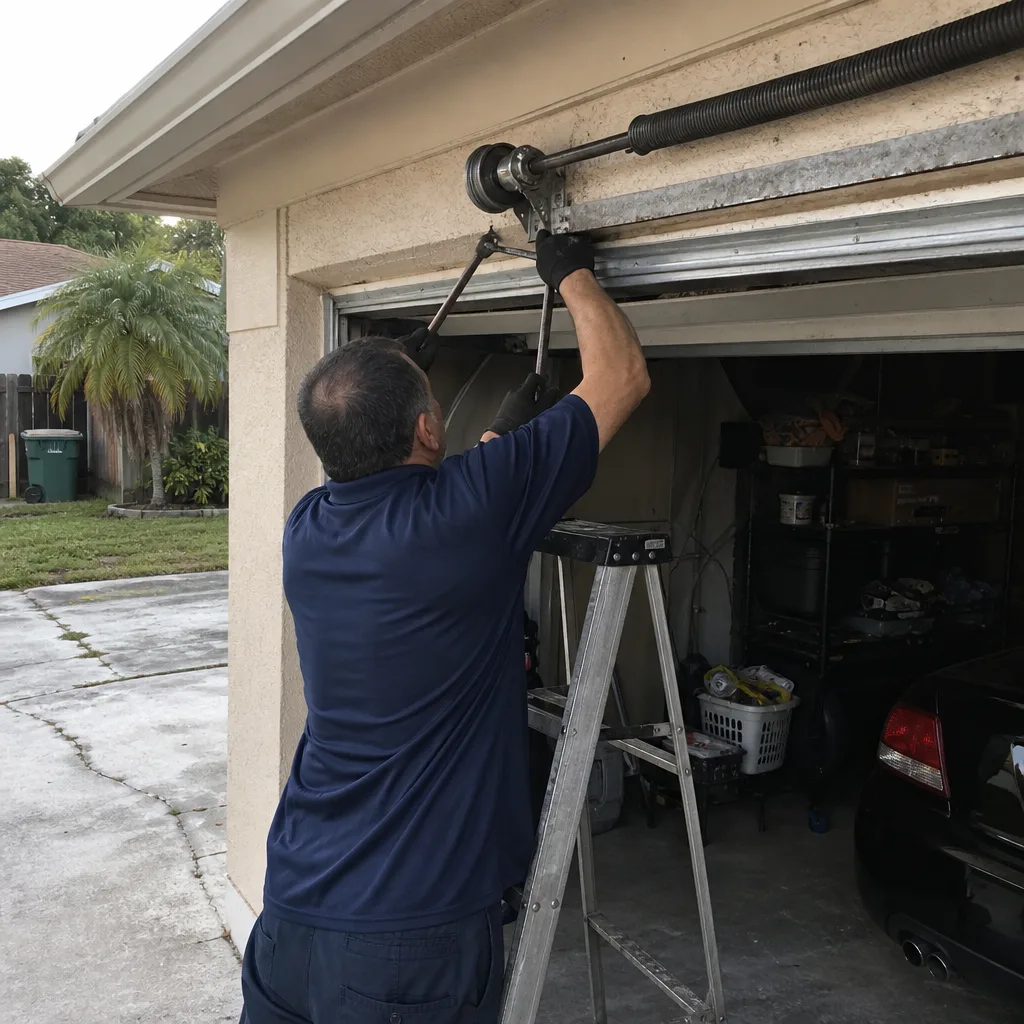 Before
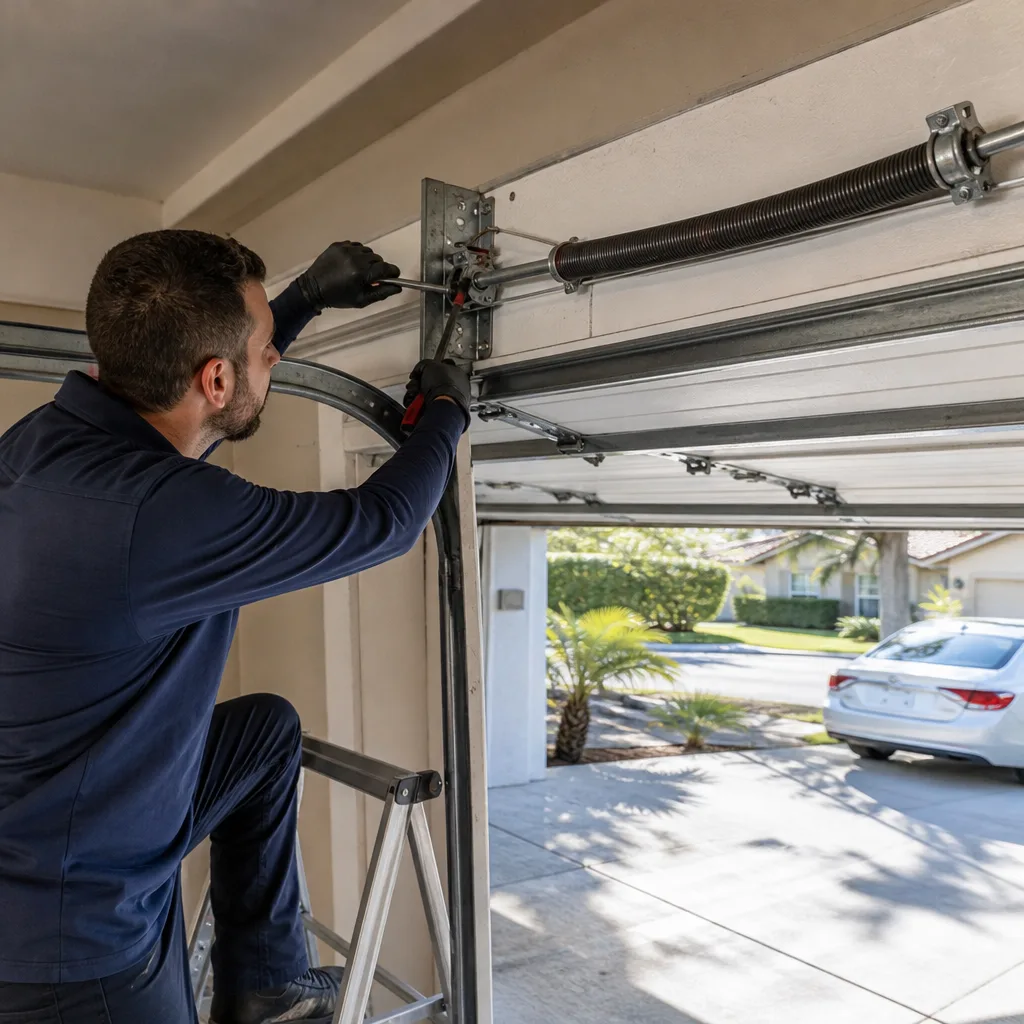 After
After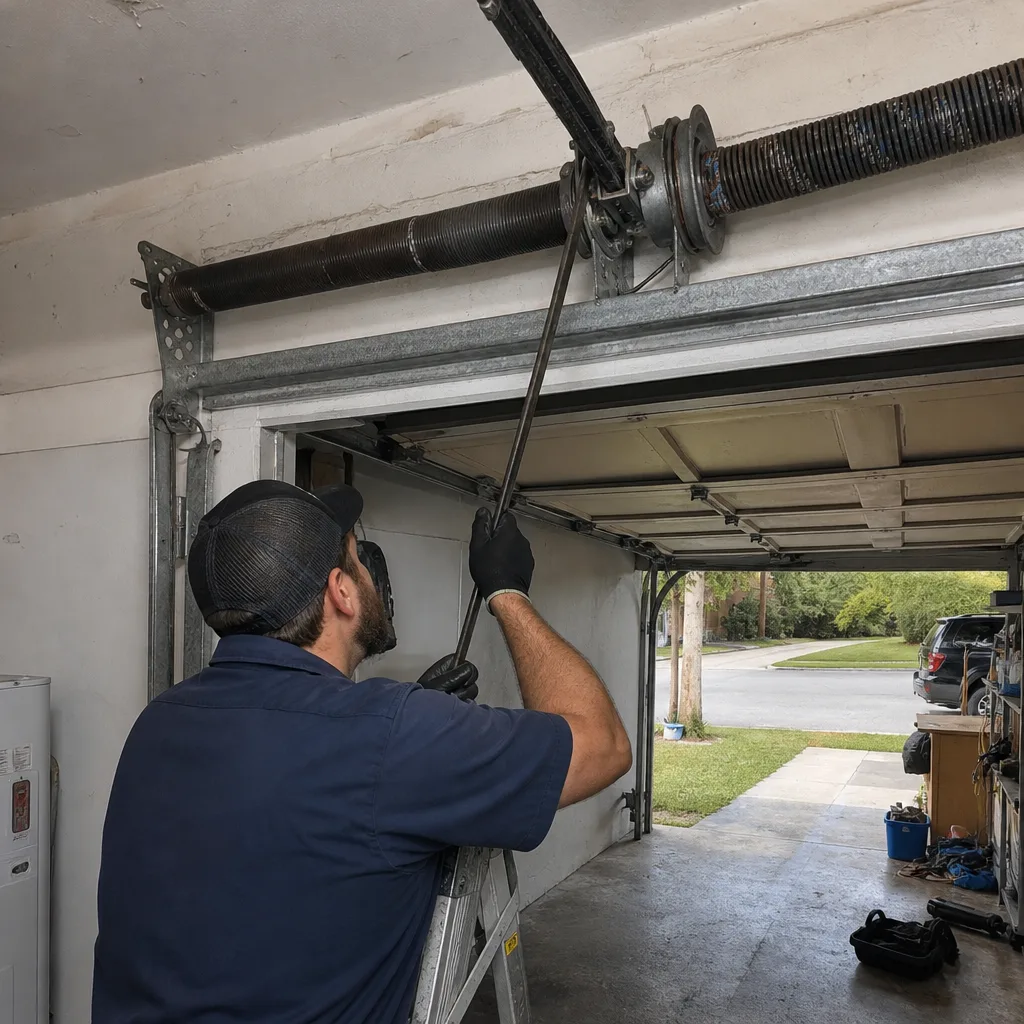 Before
 After
After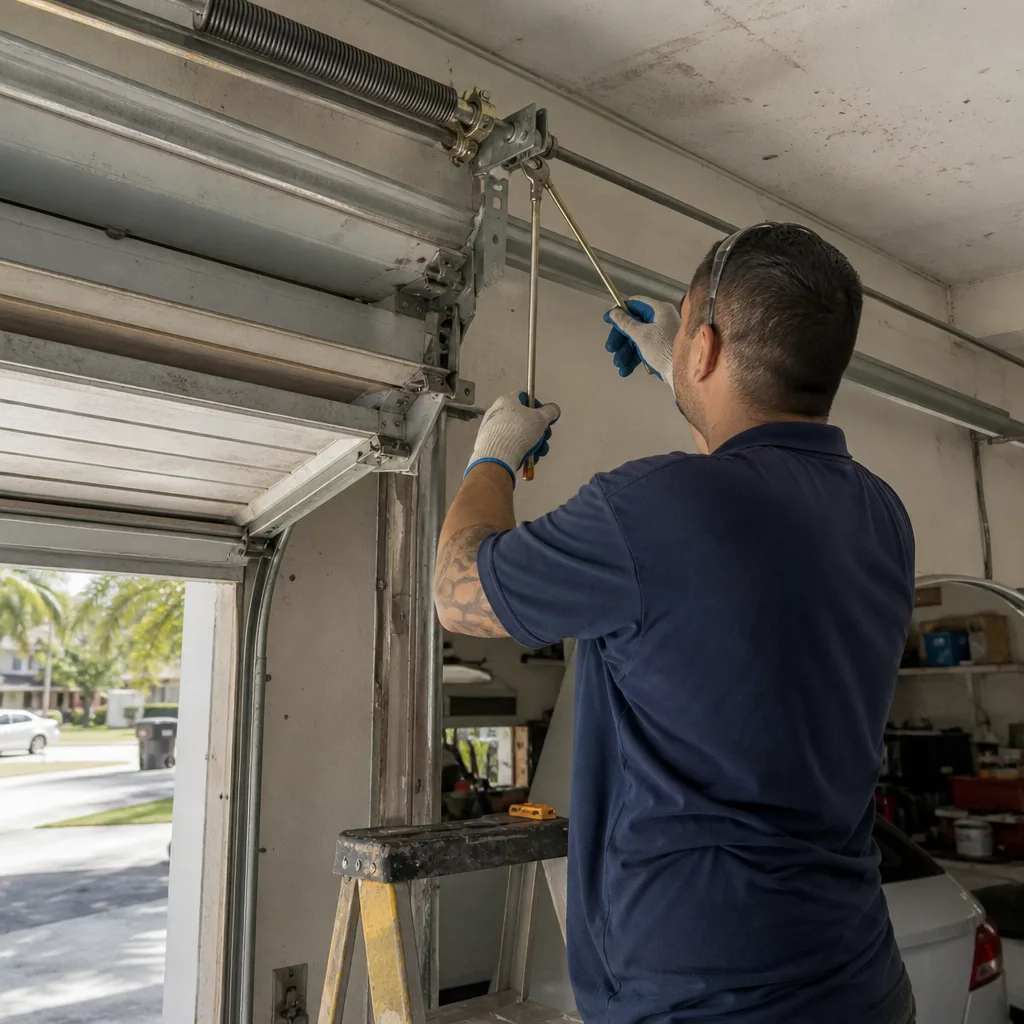 Before
 After
After