
Last updated October 16, 2026
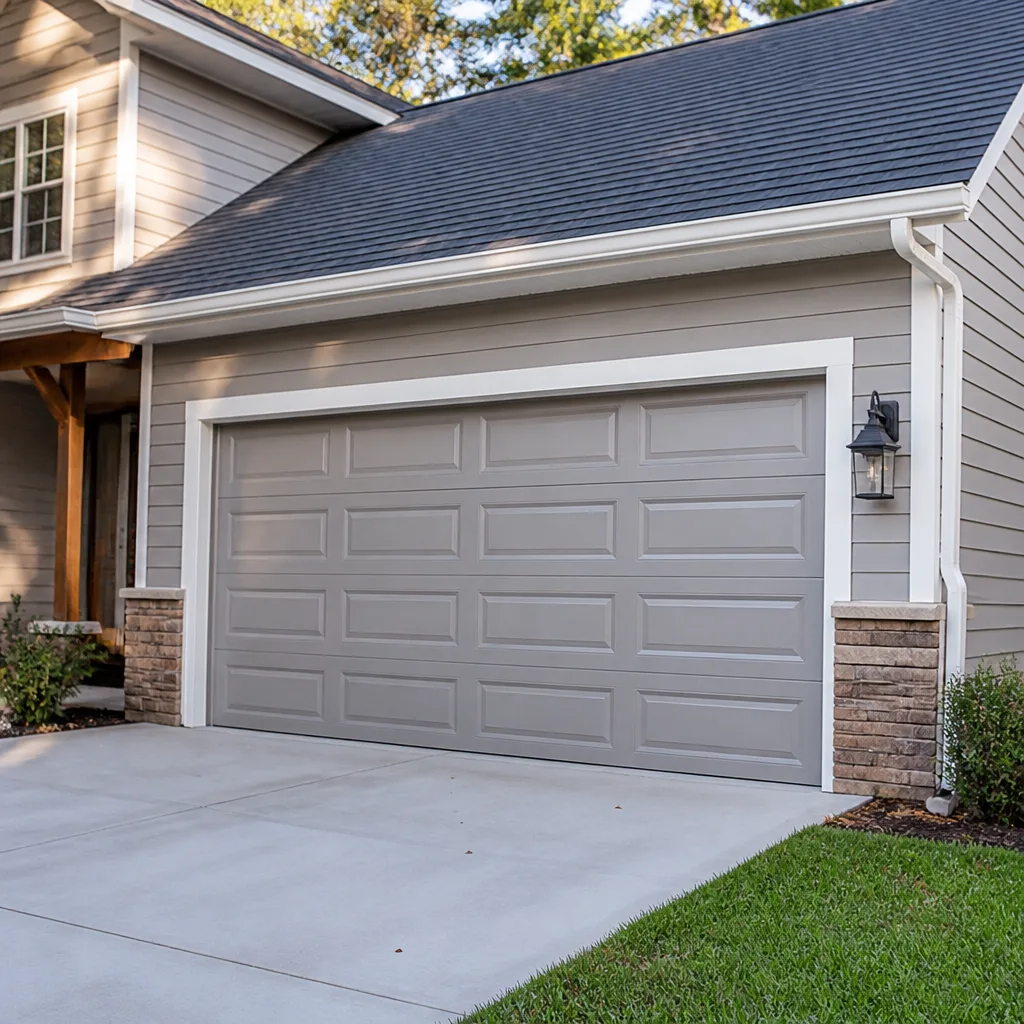 Raised-panel steel
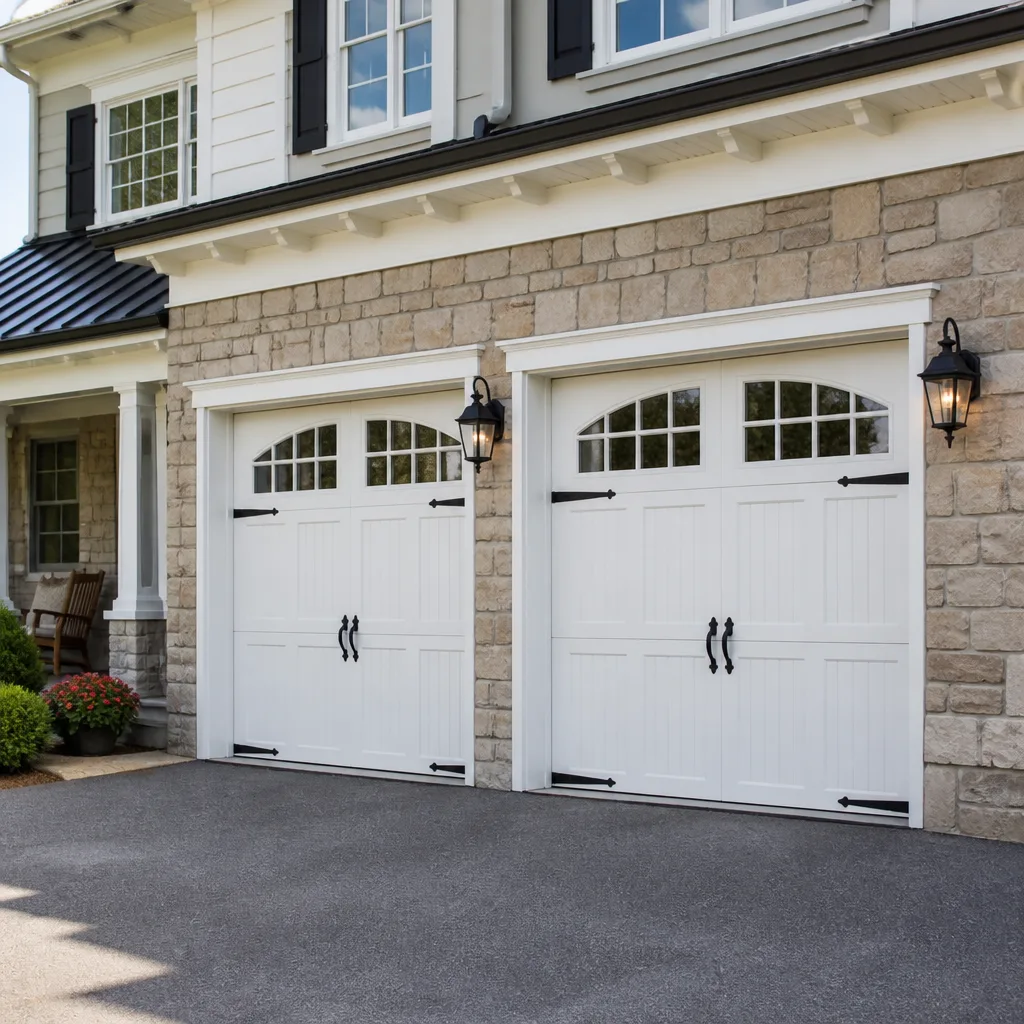 Carriage house
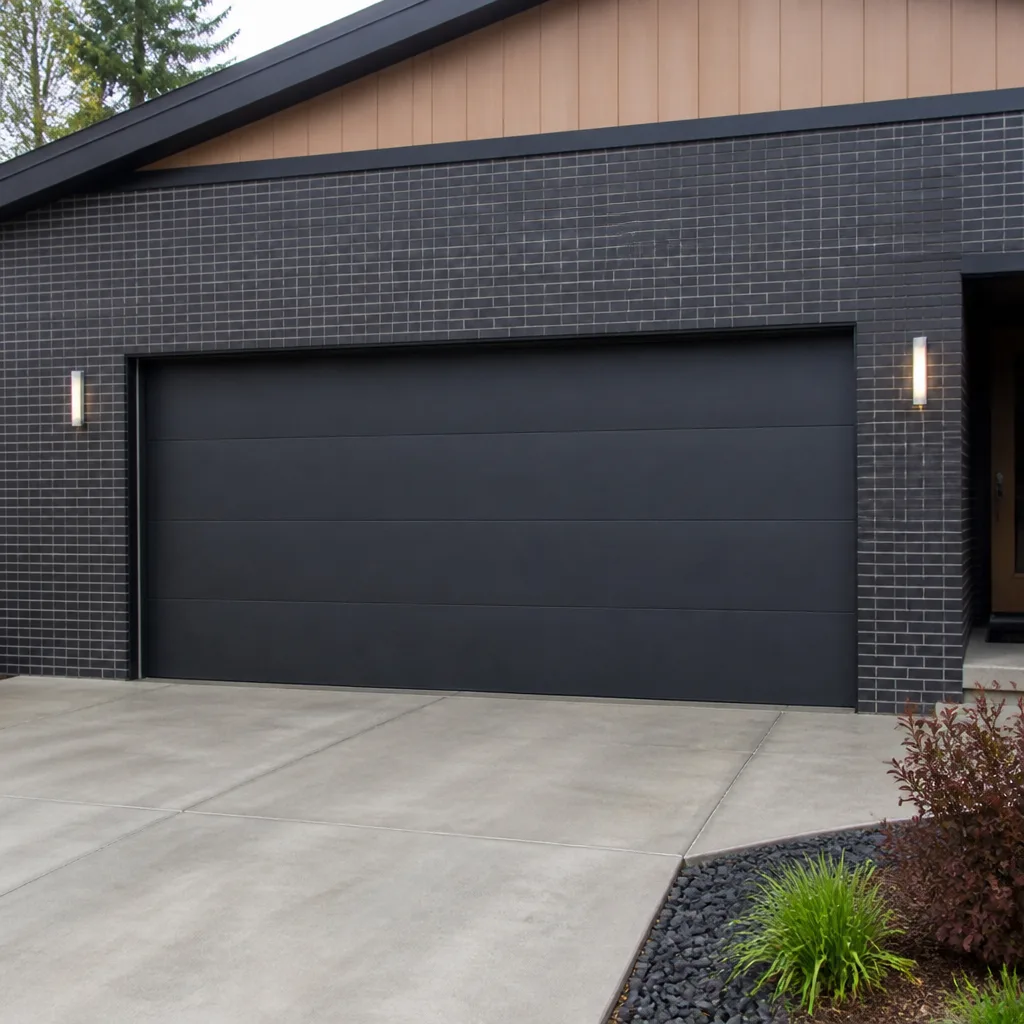 Modern flush
 Full-view glass
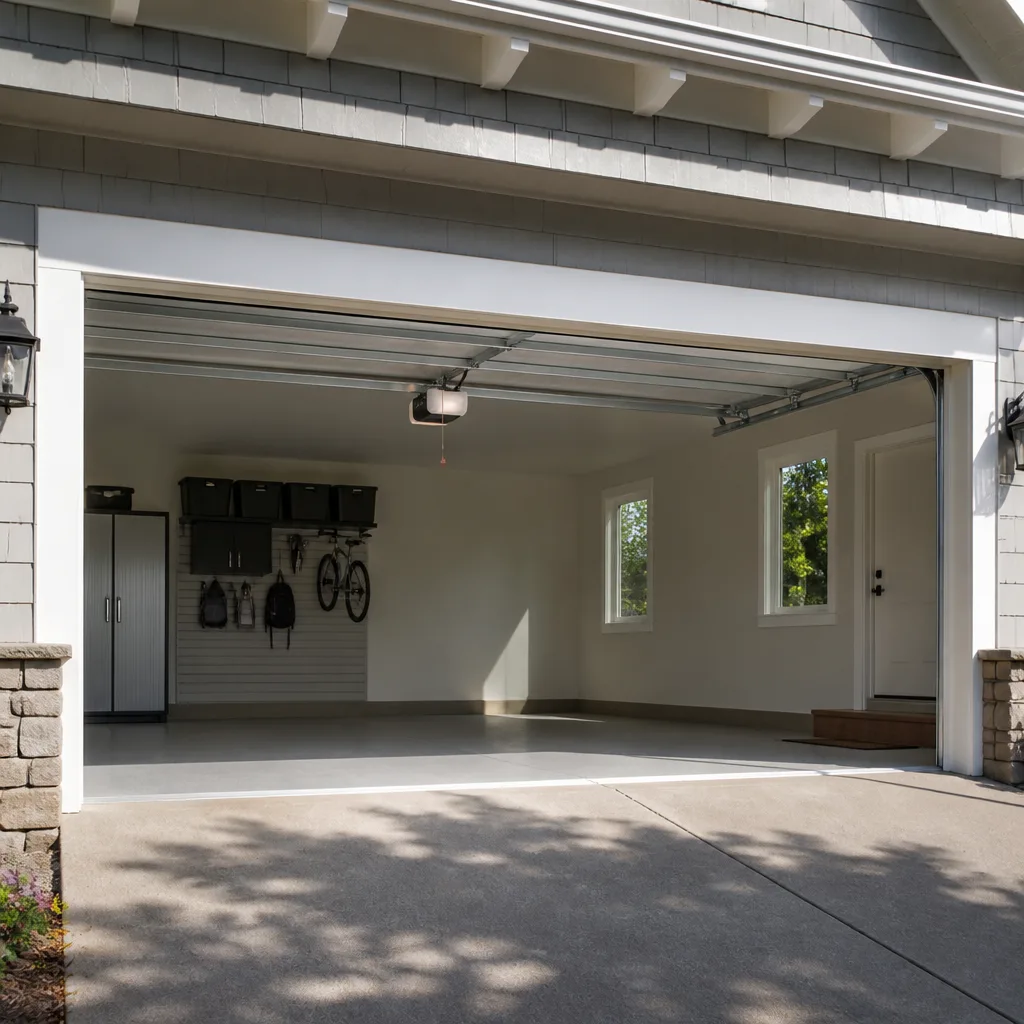 LiftMaster openers
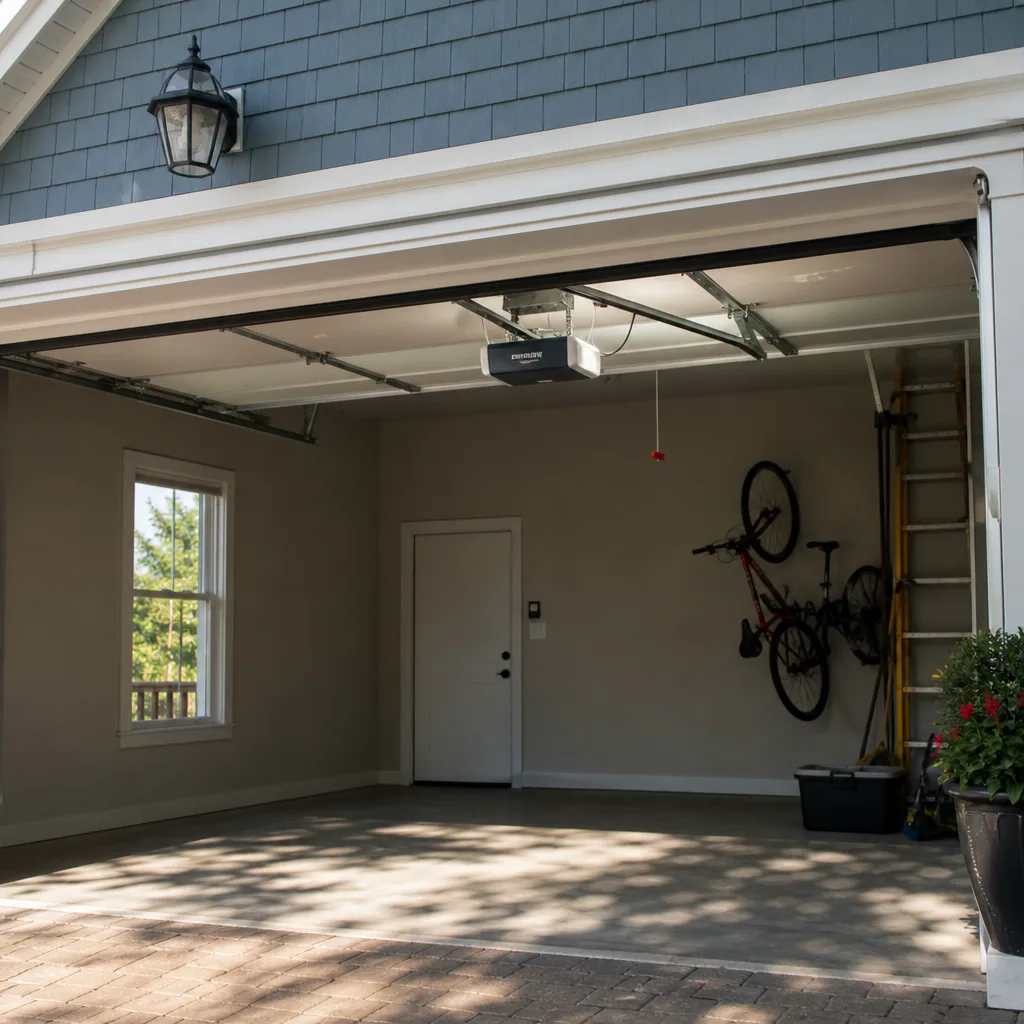 Chamberlain openers
Full 25-point door and opener safety check with every visit - springs, cables, rollers, tracks, and your LiftMaster or Chamberlain opener included
You get a price before we start. It does not change when the truck arrives.
Get your free estimateHow to Hire a Garage Door Contractor in Miami: A Step-by-Step Guide
Florida requires garage door contractors to carry a state-issued license. Ask the last three companies that gave you a quote to show you theirs on the spot, and count how many hesitate. In Miami, that hesitation is not rare – it’s structural. This guide gives you a concrete vetting process: what license to demand, what a legitimate written estimate must contain, and the five questions that separate accountable operators from volume shops before you hand over a cent. For more guides & resources on keeping your door reliable, see our blog.
Styles & brands we work with
Quick Answer
To hire a garage door contractor in Miami, verify their Florida DBPR license is active and matches the name on the quote, refuse any verbal-only estimate, demand a line-item written proposal that includes parts with model numbers and warranty terms in writing, and confirm the technician arriving is employed by the company you vetted. A legitimate Miami operator will show you their license number on request and put every dollar in writing before work begins.
Table of Contents
- Why Florida Licensing Matters More in Miami Than Anywhere Else
- How to Look Up a Miami Contractor’s License on the DBPR Database in Under Two Minutes
- Five Questions to Ask Before Scheduling an Estimate
- What a Legitimate Written Estimate Must Contain in Miami-Dade County
- The Verbal Estimate Trap: Why “We’ll See When We Get There” Is a Structural Problem
- Red Flags Specific to the Miami Market
- Common Mistakes to Avoid
- When to Call a Professional
- Frequently Asked Questions
- The Bottom Line
Why Florida Licensing Matters More in Miami Than Anywhere Else
Florida is one of the few states that requires garage door contractors to hold a specific license – not a general handyman permit, not a business tax receipt. The license type matters, and getting it wrong is the first way Miami homeowners get burned. If you want the full picture, read The Complete Guide to Garage Door in Miami. A garage door contractor in Florida must hold a Certified or Registered Garage Door Contractor license issued by the Florida Department of Business and Professional Regulation (DBPR). This is not the same as a general contractor license, and it is not optional.
Why does this matter more in Miami than in, say, a small town in central Florida? Three reasons. First, Miami’s construction market runs hot after every hurricane season, and unlicensed operators flood in from out of state because the demand is constant and the enforcement is spotty. Second, Miami-Dade County has its own product approval requirements – including NOA (Notice of Acceptance) certification for doors marketed as hurricane-rated – which a properly licensed contractor is far more likely to understand and apply correctly. Third, if an unlicensed contractor damages your home or does a repair that fails a month later, you have almost no recourse. A DBPR-licensed contractor has a license that can be suspended, a board that can be petitioned, and a written record you can point to.
When we arrive at a garage door repair in Miami, the first thing a careful homeowner should ask is not “how much” but “show me your license.” We carry it. The operators who make you wait, or tell you it’s “at the office,” or say a business license is enough – those are the ones who will also have trouble putting a price in writing.
The practical test: a real garage door contractor in Miami can produce their DBPR license number from memory or within thirty seconds from their phone. The license number starts with a prefix that identifies the license type. If what they show you says “handyman,” “general contractor,” or has no DBPR number at all, you have found the problem before it finds your money.
How to Look Up a Miami Contractor’s License on the DBPR Database in Under Two Minutes
The DBPR maintains a public license lookup portal, and it takes about ninety seconds to run a check once you know what you’re looking for. Here is the exact process:
- Go to the DBPR website and open the “Verify a License” tool. Do not use a third-party directory or a Google Maps review – those do not pull live license data.
- Enter the company name exactly as it appears on their van, their invoice, or their business card. If no record appears, try the individual technician’s name.
- Check the license type. It must say Garage Door Contractor, not General Contractor, not Specialty Contractor, not Handyman. A general contractor license does not authorize garage door work in Florida.
- Check the status. It must say Active. “Delinquent,” “Inactive,” or “Suspended” means the license lapsed – which means the operator has been working without a valid license, often without telling anyone.
- Check the expiration date. Florida licenses renew every two years. If it expired last month and they’re still scheduling jobs, walk away.
- Check the name. The license holder’s name must match the company you are about to pay. A mismatch – license held by one person, contract signed by another – is a red flag for unlicensed subcontracting, which we cover below.
This is not paranoia. This is the same due diligence a Miami homeowner would do before hiring a roofer or an electrician. Garage doors are heavy, under spring tension, and connected to your home’s security. The stakes justify the two minutes.
Five Questions to Ask Before Scheduling an Estimate
Most homeowners ask questions during or after the estimate. That’s backwards. The questions below are designed to be asked before you schedule anything. They take three minutes on the phone and immediately separate accountable operators from volume shops. Any contractor who bristles at these questions is answering them for you.
- “What’s your DBPR license number?” Write it down. Verify it before the technician arrives. If they won’t give it over the phone, do not schedule. This is the single most reliable filter in Miami.
- “Will the technician who shows up be your employee or a subcontractor?” The correct answer is “our employee.” Subcontracting is not automatically illegal, but when a Miami company sends a subcontractor, your written estimate means less – the subcontractor answers to the company that hired them, not to you, and warranty claims become a game of phone tag between two parties who each say the other is responsible.
- “Do you put the price in writing before starting work?” In Florida, for this trade, there is no legitimate reason to answer no. A company that only gives verbal estimates is choosing not to commit. You should choose not to hire them.
- “What’s your warranty – and is it in writing?” Listen for a specific number followed by specific terms. “We guarantee our work for a year, and it’s on the invoice” is a complete answer. “We stand behind everything we do” without a number or a document is not an answer. At Brock Garage Doors Miami, every repair carries a written 365-day guarantee – the 365-Day Done Right Promise: if the repair fails inside a year, we return and correct it at no charge. That promise is on every invoice, not in a sales pitch.
- “Do you train your technicians on my door’s brand?” The right answer names specific equipment. A technician who has worked on LiftMaster, Chamberlain, Genie, and Raynor systems – and who trains on them – will diagnose faster and order the right parts. A technician who says “a door is a door” is signaling that your specific system matters less than their schedule. Our technicians are trained on eight major brands, including LiftMaster, Chamberlain, Genie, and Raynor, so the repair matches what’s on your ceiling and rails – not a generic workaround.
Ask these questions in order. If the first one fails, you don’t need to ask the other four.
What a Legitimate Written Estimate Must Contain in Miami-Dade County
Miami-Dade County has specific expectations for construction contracts, and garage door work falls under them even when the job is a repair rather than a full replacement. A legitimate written estimate – not a scratch on a notepad, but a document you can hold and keep – must contain the following elements. If any one is missing, ask for a revised document before giving approval.
- Line-item labor, separated by task. “Labor: $220” with no breakdown is not a line item. You want to see what you’re paying for each discrete piece of work – spring replacement, cable replacement, track adjustment, safety sensor calibration.
- Parts with model numbers and brand names. “New torsion spring” is not sufficient. “Torsion spring, .225 wire, 2″ ID, 32″ length, Clopay part #S225-2-32” – that’s a part specification. If the estimate lists no model numbers, you cannot verify the parts installed match the parts quoted, and you will have no reference if the repair fails.
- Warranty terms in writing. The number of days and what is covered – parts, labor, both – must appear on the document itself. A verbal warranty has exactly zero enforceability. At Brock Garage Doors Miami, the warranty is printed on every invoice: your repair is covered in writing for 365 days – if it fails in that window, we return at no charge.
- The total before-tax price. This is the number you approve. It must match the final invoice number to the penny unless you approved a change order in writing first. And the price is quoted and agreed before any work starts – that is not a courtesy; it is the bare minimum of honest contracting.
- The name and license number of the company. Not just a logo. The legal business name and DBPR license number should appear on the same page as the numbers.
- A work description in plain English. “Replace right side torsion spring due to metal fatigue, re-balance door, lubricate rollers and hinges, test safety reversal.” If you don’t understand what you’re approving, the estimate is badly written, and a badly written estimate is a risk you are taking.
If a Miami contractor hands you something that looks like it was written on the back of an envelope and says “don’t worry, we’ll take care of it,” you are not looking at an estimate. You are looking at a handshake, and handshakes are not enforceable in Miami-Dade’s small claims court.
The Verbal Estimate Trap: Why “We’ll See When We Get There” Is a Structural Problem
Here’s the problem with verbal estimates, and it’s bigger than most people realize. A verbal price is not a rough draft of a written one. It is a pricing strategy. The contractor quotes you $180 on the phone, arrives, inspects, and tells you the job is actually $340 because “the springs are a different size” or “the tracks are worse than expected.” You’re standing in your garage with the door open and the problem getting worse. You say yes because saying no means starting the whole search over. That is not an accident. It is a conversion funnel, and it is designed to exploit the fact that when the technician is at your home, your leverage is gone.
The reason this is structural – not a one-off mistake – is that it works. Enough homeowners say yes to the higher number that the company profits. The only fix is to remove the variable before the technician arrives. When a company refuses to put a price in writing before dispatching, they are telling you they expect to raise it later. Walk away cleanly: “Thanks, but I need the number in writing before I schedule.” Any reputable garage door opener repair in Miami operation can quote most jobs accurately from photos and a description before the truck leaves the shop. If they tell you they can’t, keep looking.
At Brock Garage Doors Miami, the written price is handed over before any work starts, every time. Not sometimes. Not when you ask. The number on the invoice matches the number you approved. That is the whole discipline – price in writing, before a single bolt turns.
Red Flags Specific to the Miami Market
Every city has bad contractors, but Miami has a particular set of problems that out-of-state operators and volume shops exploit. These are not general warnings – they are specific to how the trade operates here.
- Unlicensed subcontracting. A company books the job, takes a deposit, and sends someone who is not their employee and not licensed under their number. You find out when you see a different name on the truck or when the warranty claim dead-ends. Always ask who owns the license and whose insurance covers the person on your property. If the name doesn’t match, the job is a bet, not a service.
- NOA-uncertified doors sold as “hurricane rated.” Miami-Dade requires that hurricane-rated garage doors carry a Notice of Acceptance (NOA) – a county product approval. Some operators sell standard doors with decorative bracing and call them hurricane-rated. If the door has no NOA number posted, it is not approved for Miami-Dade’s wind-load requirements, and your insurance company may deny a storm-damage claim because of it. Ask for the NOA number. A licensed Miami contractor will have it.
- Post-storm surge pricing. After a hurricane or heavy storm season, garage door companies in Miami are flooded with demand. Some operators triple their prices and require full payment upfront. Legitimate companies price by the job, not by the weather. At Brock Garage Doors Miami, the price is quoted before work begins and does not change because the phone is ringing more.
- The out-of-state plate and the five-star sticker. A van with Georgia tags and a peeling five-star rating decal that was never earned. Miami’s post-disaster economy attracts chasing storms. Check the DBPR license – if it’s active and it says Garage Door Contractor, the plate is irrelevant. If there is no license, the plate is the warning.
- Deposit-before-estimate demands. No legitimate Miami garage door contractor requires a deposit to come look at the door. Estimates – including written ones – should be free. A deposit before a written proposal is a scam pattern that repeats in this market every season.
Common Mistakes to Avoid
- Skipping the license check because the reviews looked good. Reviews can be bought, and in Miami’s competitive market, some of them are. A DBPR license cannot. Check the license first; read the reviews second – not the other way around.
- Hiring based on the cheapest phone quote. A $95 spring “deal” in Miami is almost always a bait quote – the price moves to $300 once the technician arrives. Compare written estimates, not verbal ones, and throw away the lowest bid if it comes with no warranty in writing.
- Not asking about the brand of parts being installed. Some Miami repair companies install generic, off-brand springs with shorter lifespans to protect their margin. Ask for the brand and model number of every part on the estimate. Our technicians work with LiftMaster, Chamberlain, Genie, and Raynor components and specify exactly what is going on your door.
- Accepting a warranty that is spoken, not written. “We guarantee it” evaporates the moment the truck pulls away. If the word “warranty” appears nowhere on your invoice, you have no warranty.
- Letting a technician rush you into a “today only” price. Artificial urgency is the signature of a volume shop. Legitimate pricing does not expire at sunset. Walk away from anyone who says the price is only good if you say yes right now.
- Ignoring the safety sensors on an opener repair. In Miami’s humidity, sensors corrode and fail. A technician who bypasses rather than replaces a faulty safety sensor is leaving you with a door that can close on a child or a pet. Insist the sensors are tested and certified working before the job is closed. This is why garage door cable repair in Miami and opener work should only be handled by someone with the training to test the safety reversal system properly.
When to Call a Professional
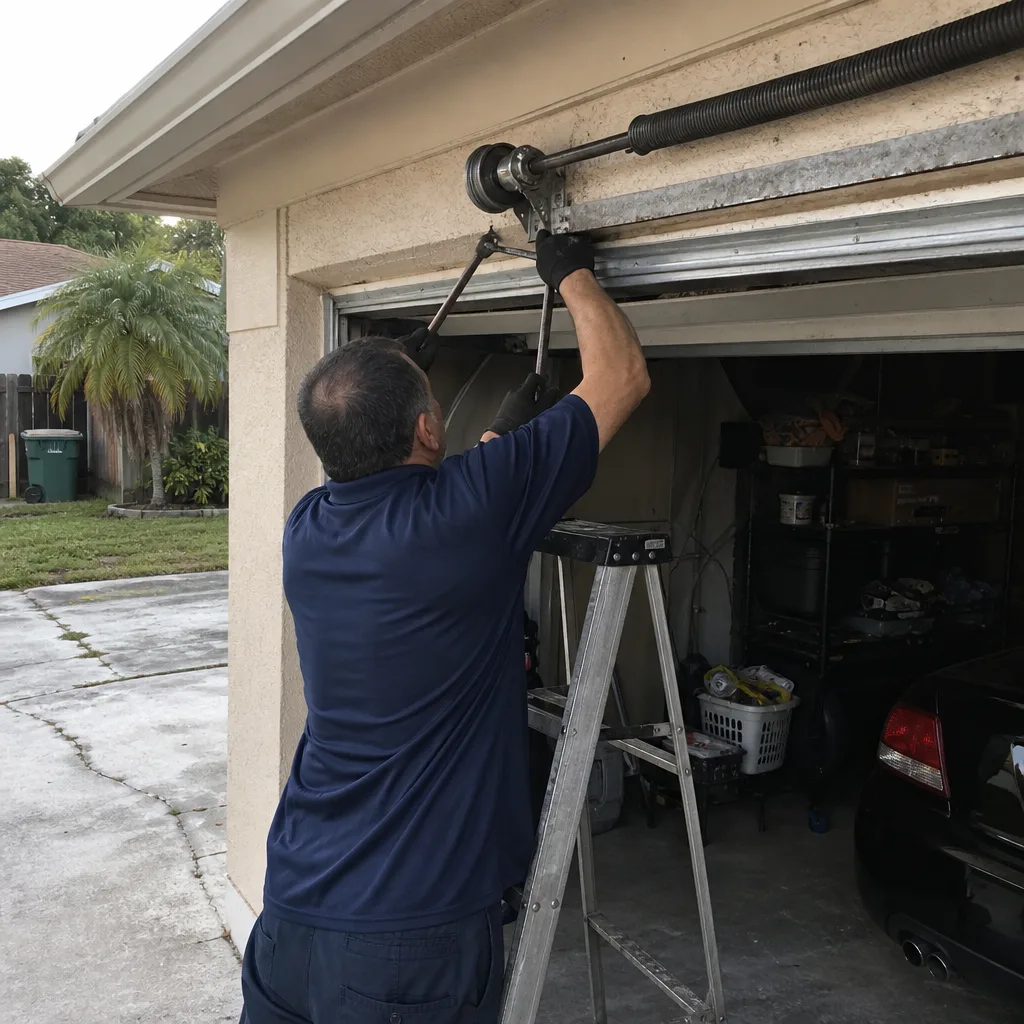
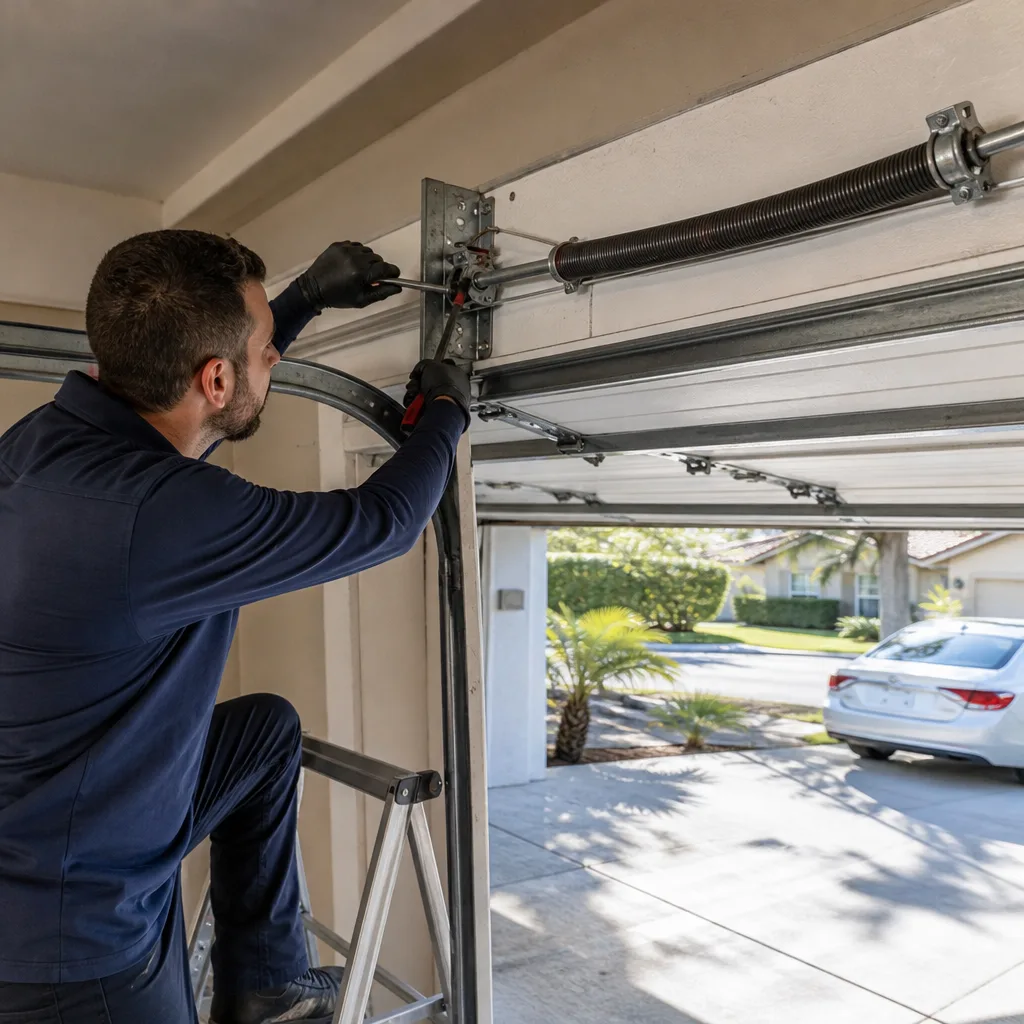
Be honest with yourself about which jobs you can handle and which are beyond a hand tool and a YouTube video. Replacing a broken roller or lubricating hinges is within reach for an experienced homeowner. Replacing a torsion spring – the thick coiled spring mounted above the door that holds the lifting load – is not. Torsion springs are under several hundred pounds of torque, and when one lets go, the wound metal can cause serious injury. Cables under tension are the same category of danger. If your door is off its tracks, the cables are frayed, or the spring has snapped, call a licensed contractor who does this every day. The good news is that the right contractor will provide a written estimate first, so the call costs nothing but time. Brock Garage Doors Miami offers free estimates in Miami – call (850) 403-9654 and a live person will set the appointment right then, day or night.
Frequently Asked Questions
A garage door contractor in Florida must hold a Garage Door Contractor license issued by the DBPR – not a general contractor or handyman license. Verify it is active and matches the company name at the state’s license portal before scheduling.
Most Miami repairs run between $150 and $450. Cable repairs typically run $150 – $275 depending on cable type and drum condition; a single torsion spring replacement usually falls between $180 and $340; opener repairs range from $150 to $400 depending on whether you’re replacing a circuit board or the whole unit. Call (850) 403-9654 for an exact written quote – estimates are free.
Yes – and in Miami, you should insist on it. At Brock Garage Doors Miami, every repair carries the 365-Day Done Right Promise in writing: if the covered repair fails within one year, we return and correct it at no additional charge.
Check for the NOA (Notice of Acceptance) number on the door and in the paperwork. Miami-Dade requires hurricane-rated doors to carry county product approval; a door sold as “hurricane rated” without an NOA number is not certified for the county’s wind-load requirements.
Not if you’re working with the right contractor. The price quoted before work begins should be the price on the invoice – and it is at Brock Garage Doors Miami, where the written price is handed over before any work starts and matched to the final invoice, every time. If a contractor tells you the price will “depend on what we find,” get the number in writing before you schedule. Call (850) 403-9654 for a free estimate with the price locked in writing.
Most reputable Miami garage door companies do not charge for estimates, and you should not pay for one. A written, line-item estimate is part of the job, not a separate fee. At Brock Garage Doors Miami, estimates are always free – call (850) 403-9654 to schedule one.
The Bottom Line
Hiring a garage door contractor in Miami is not about finding the cheapest company. It’s about finding the company whose paperwork matches their promises. Verify the DBPR license. Demand a written estimate with line-item parts and warranty terms. Reject verbal-only pricing because it’s a strategy, not a shortcut. And hold out for the contractor who names their warranty in numbers and puts it on paper. The process takes minutes now and can save you thousands – and a damaged door – later. If you’d like that standard applied to your garage door, call Brock Garage Doors Miami at (850) 403-9654 – a live person answers, day or night. For more on how we operate, start at our Brock Garage Doors Miami home page.
Written by Wade Mercer, Owner at Brock Garage Doors Miami, serving Miami since 2001.
See the difference
 Before
 After
After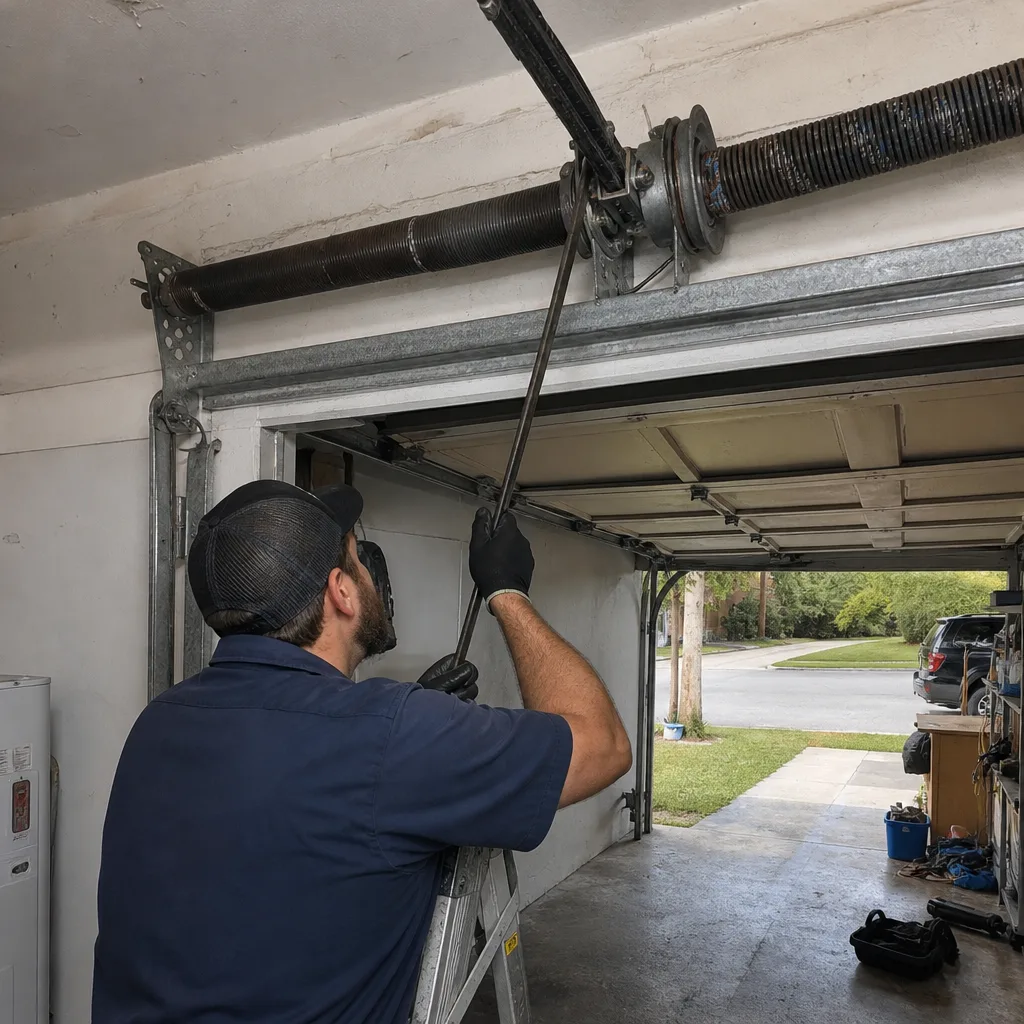 Before
 After
After Before
 After
After