
Last updated October 16, 2026
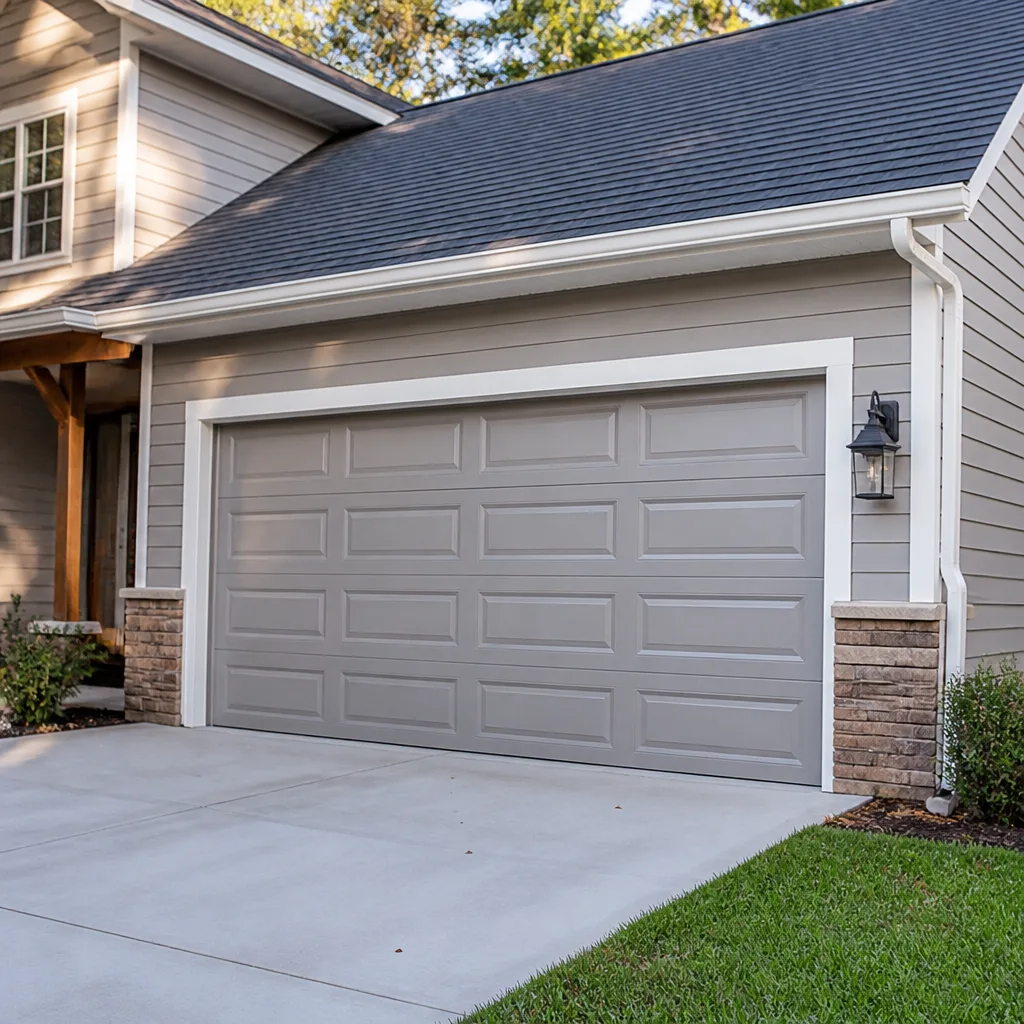 Raised-panel steel
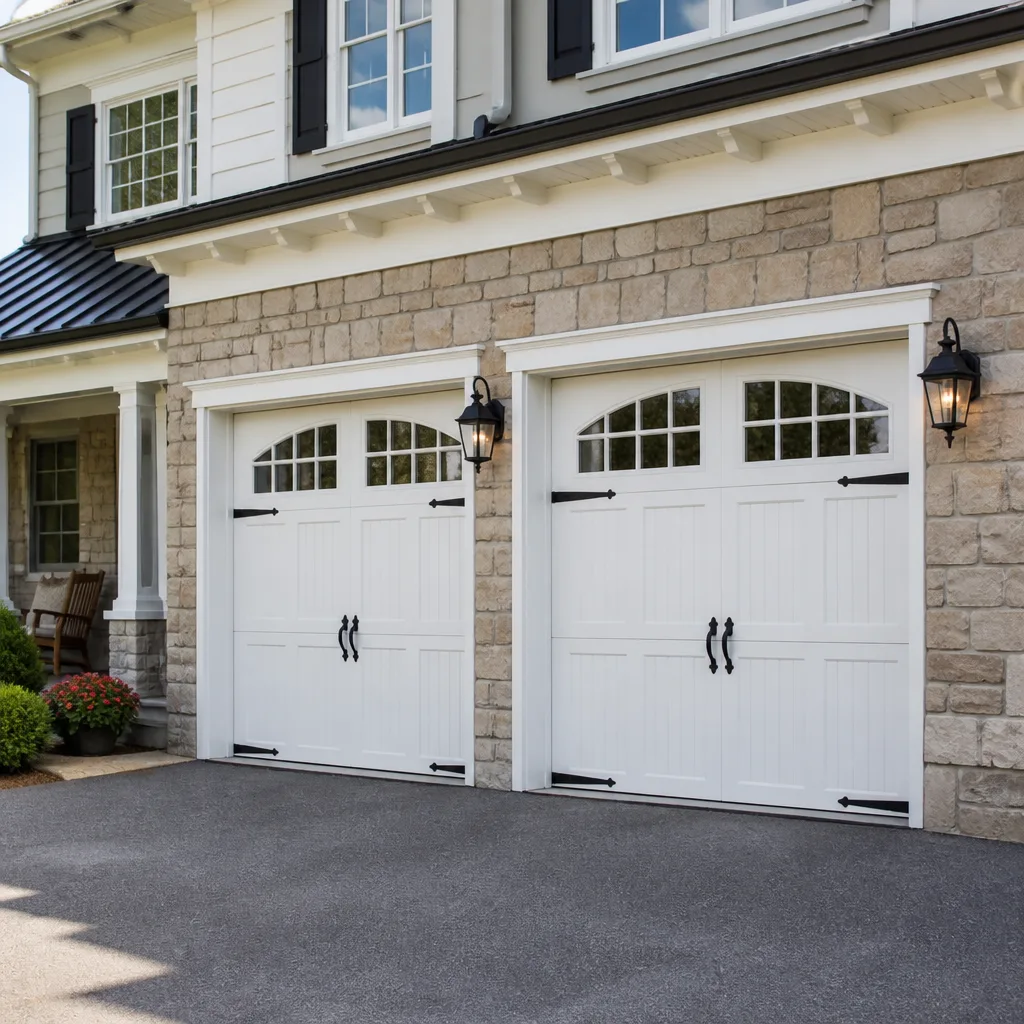 Carriage house
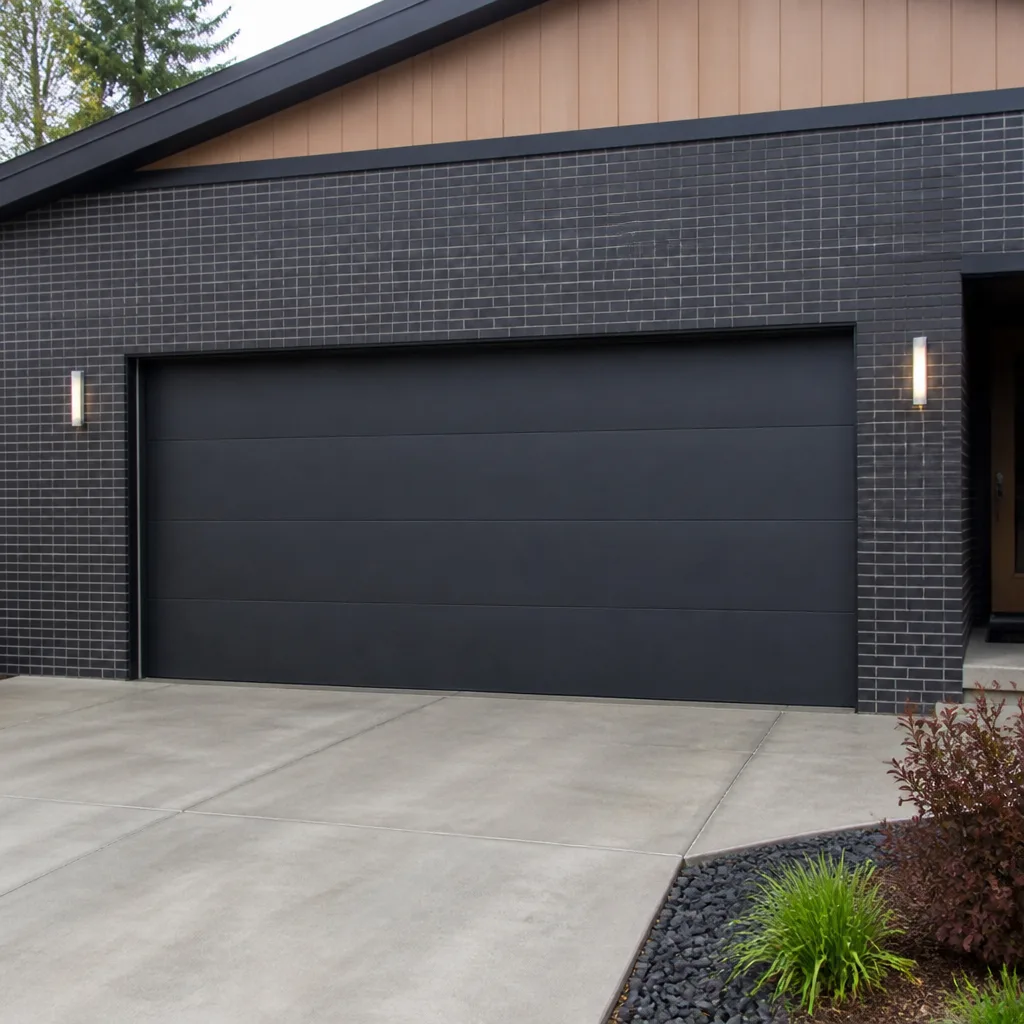 Modern flush
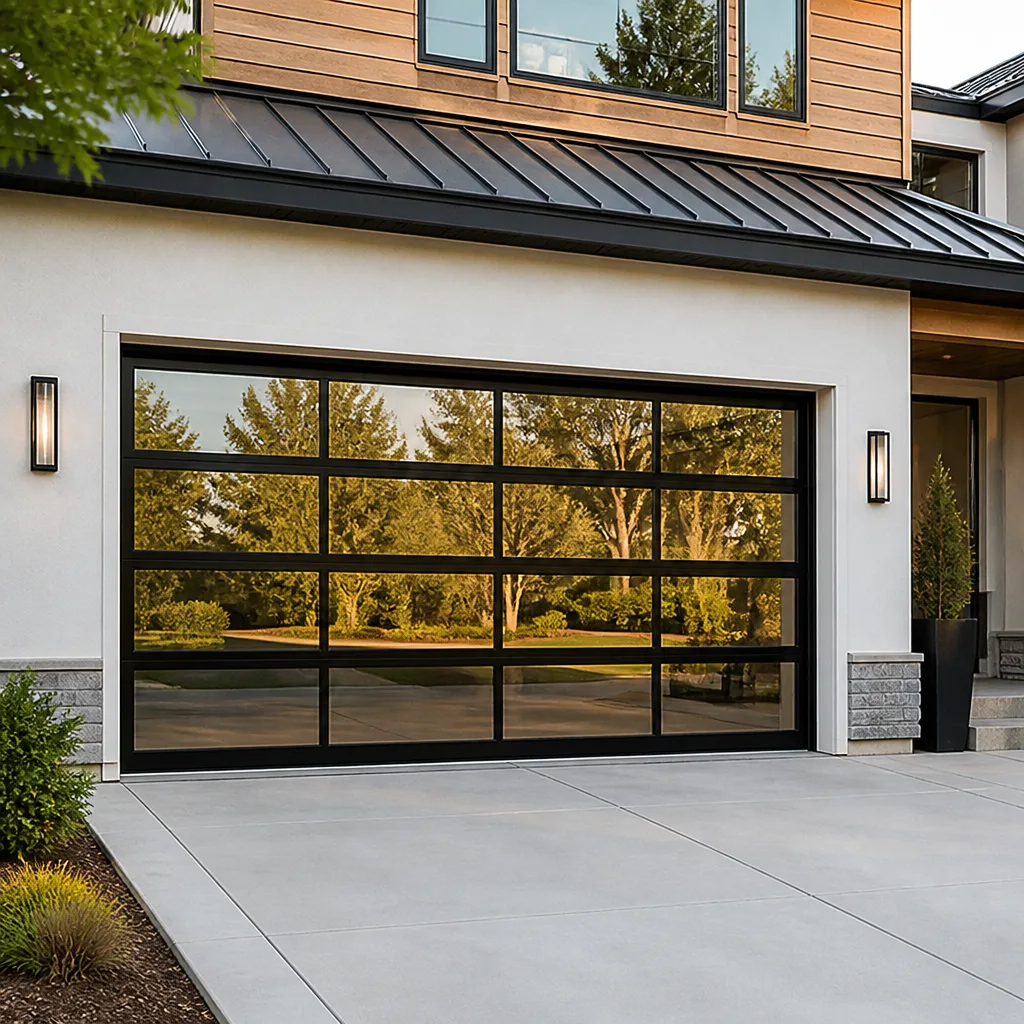 Full-view glass
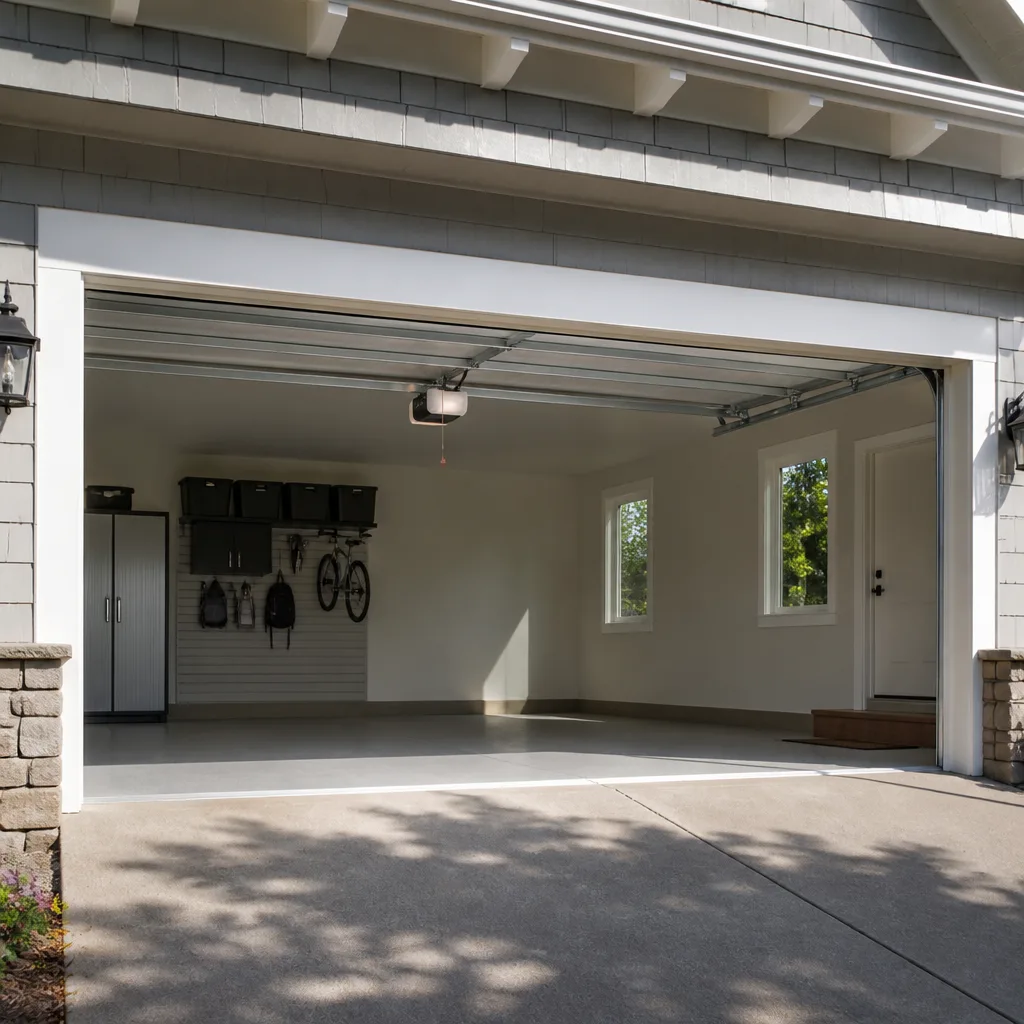 LiftMaster openers
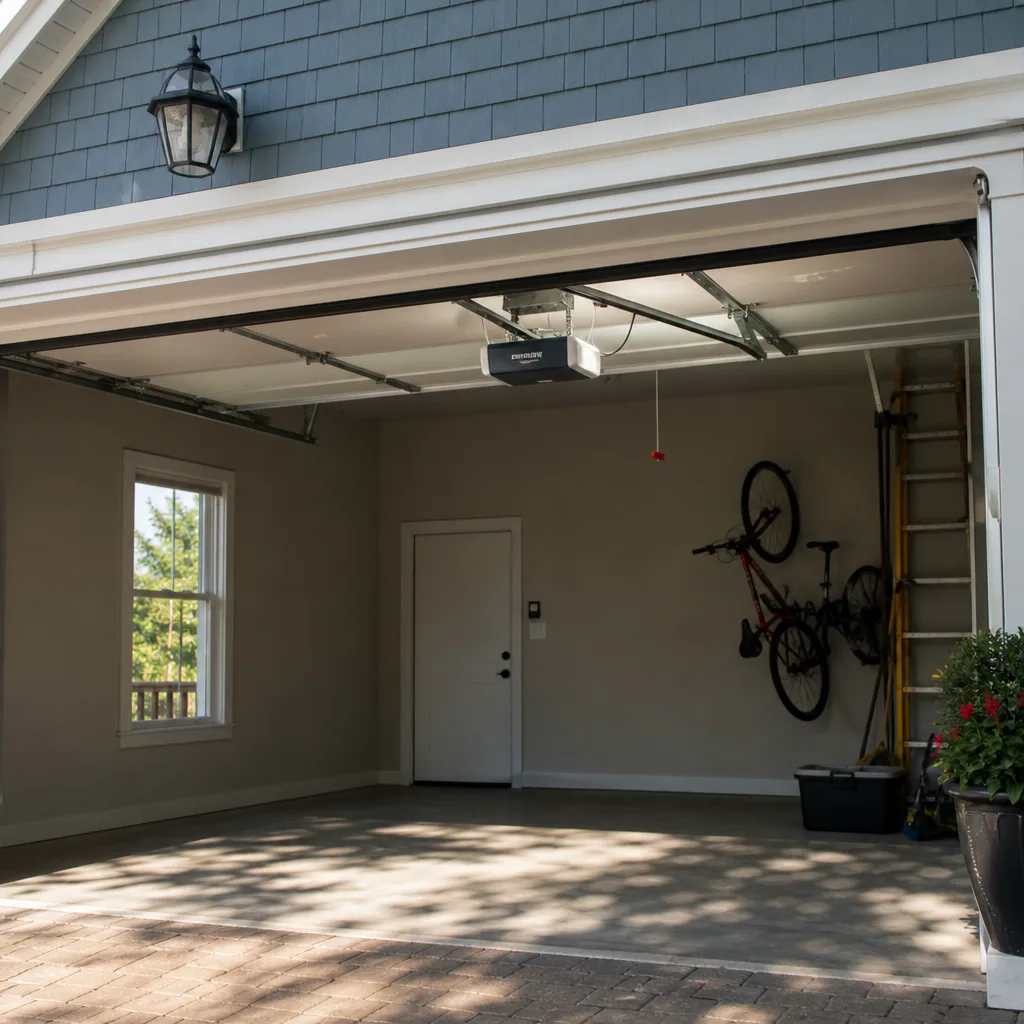 Chamberlain openers
Full 25-point door and opener safety check with every visit - springs, cables, rollers, tracks, and your LiftMaster or Chamberlain opener included
You get a price before we start. It does not change when the truck arrives.
Get your free estimateThe Complete Guide to Garage Door in Miami
Most garage door guides are written for a suburb in Ohio. They assume a door is a door: steel panels, torsion springs, a track, done. Miami homes sit inside a High-Velocity Hurricane Zone, and that changes everything. A door that meets code in Cincinnati will fail inspection in Coral Gables, void its warranty in Cutler Bay, and cost an owner thousands when salt air eats the hardware inside two years. This guide gives you the Miami-specific specs: what to buy, what to avoid, what actually lasts, and what it costs.
Styles & brands we work with
Quick Answer
A garage door in Miami must carry Miami-Dade Product Approval (NOA), be sized for the wind-load rating of your specific ZIP code, and use corrosion-resistant materials rated for coastal salt air. A code-compliant installed door with insulated panels typically runs $1,400 to $4,200 depending on size, material, and wind rating; repairs like springs and cables run $150 to $340. Garage Door Repair in Miami should always include a written price before any work begins and a written warranty on the repair.
Table of Contents
- Why a Garage Door in Miami Is Not the Same Product
- Miami-Dade Product Approval (NOA): The Non-Negotiable Requirement
- Steel vs. Aluminum vs. Fiberglass: What Actually Survives Salt Air
- HVHZ Wind-Load Ratings: What the Numbers on the Quote Sheet Mean
- Insulation and Heat: What Miami’s Sun Does to an Uninsulated Door
- What a Garage Door Costs in Miami (Real Ranges)
- How to Read a Miami Garage Door Quote Without Getting Burned
- Common Mistakes to Avoid
- When to Call a Professional
- Frequently Asked Questions
- The Bottom Line
Why a Garage Door in Miami Is Not the Same Product
A garage door has one job in most of the country: open and close. In Miami, it has four jobs. It has to open and close, yes. It has to stay attached to the house in a Cat 5 hurricane. It has to resist salt-driven corrosion that destroys standard hardware in 18 to 24 months near Biscayne Bay. And it has to keep a garage interior from turning into a convection oven under a Florida sun that bakes an uninsulated steel door past 140 degrees by noon in July.
Each of those jobs changes the spec. Salt air means you cannot run untreated steel track and standard zinc hardware near the water. Wind-load requirements mean panel gauge, strut placement, and track thickness are not optional upgrades; they are the difference between a door that passes inspection and one that gets red-tagged. And heat means insulation is a functional necessity, not a comfort add-on. When a Miami homeowner buys a door off a national website without those local specs, the door usually works. For about a year. Then the hardware starts to rust, the panels start to flex under wind, and the warranty claim gets denied because the door was never approved for Miami-Dade County in the first place.
We work on doors across Miami every week, from Kendall to Homestead to North Miami Beach. The doors that fail are rarely old doors. They are wrong doors: doors that were never matched to the demands of this climate and this code. The doors that hold up are the ones where someone made a local decision instead of a catalog one.
Miami-Dade Product Approval (NOA): The Non-Negotiable Requirement
Miami-Dade County maintains a product approval system called NOA, short for Notice of Acceptance. Any garage door installed in Miami, whether it is a new door or a replacement panel system, must carry an active NOA for the specific wind-load requirements of the property. This is not a sales upsell. It is the law, and it is the first thing an insurance adjuster checks after a storm.
Here is how to verify a door carries a valid NOA before you sign anything:
- Ask for the NOA number. Every approved product has a unique NOA number, typically formatted like “NOA No. 23-0915.02.” If the seller cannot produce one, walk away.
- Look it up on the Miami-Dade County Building Department’s product control search. The county maintains a public database. Type in the NOA number and confirm the approval is active, not expired, and not suspended.
- Check the approval covers your specific application. An NOA lists approved uses, panel sizes, track configurations, and maximum design pressures. A door approved for a 16-foot opening may not be approved for an 18-foot opening.
- Match the design pressure to your property. Miami’s wind zones vary by location. A door with a design pressure of plus or minus 28 pounds per square foot may pass in one neighborhood and fail in another. The NOA tells you the limits.
In our experience, the biggest gap Miami homeowners face is not a missing NOA. It is an NOA that does not match the installation. A door can carry a valid approval for a standard installation, and then a crew installs it with a heavier bottom strut or a different jamb configuration that voids the approval. The door “looks fine.” It may even pass a visual inspection. But when a claim comes, the adjuster checks the installation against the NOA drawings, finds the mismatch, and denies the claim. That is the gap between a door that opens and closes and a door that is actually protected. Garage Door Cable Repair in Miami work should always reference the existing door’s NOA if it carries one.
Steel vs. Aluminum vs. Fiberglass: What Actually Survives Salt Air
Miami’s coastal air is not a minor environmental factor. It is a continuous corrosion engine. Salt-laden air from Biscayne Bay and the Atlantic settles on every exposed metal surface, and when that moisture combines with the humidity, standard electro-galvanized hardware starts to pit and rust within 18 to 24 months. Here is how the three common door materials actually perform in Miami’s coastal environment:
- Steel (galvanized, factory-finished): The most common choice nationally, and the most misapplied in Miami. A properly galvanized steel door with a factory-applied, baked-on finish can perform well for 8 to 12 years if the hardware is upgraded and the door is washed quarterly. Cheap steel doors with thin gauge panels and standard zinc hinges start rusting at the edges within two years near the coast. If you are more than five miles inland, quality galvanized steel is the value choice. If you are within two or three miles of Biscayne Bay, it needs upgraded stainless hardware, or it will fail early.
- Aluminum (with factory finish): The best material for homes within three miles of saltwater. Aluminum does not rust the way steel does. It can corrode, but the corrosion is slower and less structural. Door frames and track components are available in aluminum, and the panels are lighter, which reduces wear on springs and openers. The tradeoff is dent resistance: aluminum panels dent more easily than steel, which matters in a city where bicycles, cars, and hurricane debris all hit doors.
- Fiberglass (composite): An underused option for coastal Miami. Fiberglass panels do not rust at all, do not dent easily, and hold paint and finish well. The limit is wind-load capacity. Fiberglass doors are generally approved for lower design pressures than reinforced steel or aluminum, which means they are a strong choice for inland Miami but may not meet HVHZ requirements for exposed coastal lots.
The neighborhood matters. A homeowner in Coconut Grove, five hundred yards from the bay, has different material demands than a homeowner in Westchester, six miles inland. Not better or worse. Different. The decision gets made on proximity to saltwater, property exposure, and budget bracket, in that order. In our experience, an aluminum door with upgraded stainless hardware is the correct call for a coastal Miami ZIP code, while a reinforced galvanized steel door is usually the better value for inland properties that still need wind-load compliance.
HVHZ Wind-Load Ratings: What the Numbers on the Quote Sheet Mean
Miami-Dade and Broward Counties sit inside what Florida’s building code calls the High-Velocity Hurricane Zone, or HVHZ. Within the HVHZ, a garage door is considered part of the building envelope. That means it cannot just open and close. It must withstand the design wind pressures for the specific property, and those pressures are measured in pounds per square foot, not in marketing phrases like “hurricane rated.”
Here is how to read the wind-load line on a Miami garage door quote:
- Design pressure (DP) rating. Every code-compliant Miami door will carry a design pressure rating, such as “DP ±35” or “DP ±42.” The number is the positive and negative wind pressure in pounds per square foot the door assembly can withstand. Higher is not automatically better; it needs to match the requirement for your specific address.
- Impact rating. Some doors carry an impact rating for wind-borne debris, meaning the panels and track have been tested to withstand a projectile hit without breaching. An impact-rated door costs more than a wind-rated door, but it is required for many coastal homes and may reduce your windstorm insurance premium. Check with your insurer before you buy.
- Reinforcement requirements. Wind-resistant doors often require vertical steel struts, heavier gauge track brackets, and specific jamb anchoring. A quote that lists “hurricane reinforcement” without specifying strut gauge, bracket spacing, and anchor type is not a complete quote. A proper Miami quote itemizes those components.
When a homeowner shows us a previous quote, the most common issue we see is a DP rating that does not match the property’s exposure. A door rated DP ±28 might pass for a screened, interior lot in Kendall, but that same door on an exposed corner lot in Palmetto Bay needs DP ±40 or higher. The difference is not cosmetic. It is structural. And it is why a Miami garage door cannot be bought off a national website without someone checking the wind map. We work with LiftMaster and Genie openers regularly, and the opener is only as good as the door it is attached to; a door that flexes under wind load will tear up an opener and its track over time.
Insulation and Heat: What Miami’s Sun Does to an Uninsulated Door
Miami’s sun is a load, not just a weather condition. In July and August, an uninsulated steel garage door facing west can reach 140 to 150 degrees on the interior surface by early afternoon. The heat radiates into the garage, warms the air, and then bleeds into any adjacent living space. If your garage is attached to the house, an uninsulated door is a heater you cannot turn off.
Most garage door insulation is measured in R-value, the same measure used for attic insulation. Here is how the numbers work in practice for Miami:
- R-0 to R-3 (uninsulated): Common on the cheapest builder-grade doors. Makes sense only for detached garages that never contain anything heat-sensitive and are not adjacent to living space. In Miami, an uninsulated door on an attached garage raises cooling load noticeably from June through October.
- R-6 to R-9 (single-layer polystyrene): The standard for most upgraded Miami doors. Noticeable difference in interior garage temperature, especially when combined with a ventilated roof deck. Good value for most homes in Dade County.
- R-12 to R-18 (double-layer polyurethane): The high-performance option. Also adds structural stiffness, which helps the door meet higher wind-load requirements. We recommend this range for coastal homes that need both impact resistance and thermal performance.
The heat point matters on repair decisions, too. Springs, cables, and motors inside a Miami garage operate in ambient temperatures that shorten their service life compared to the same components in Ohio. A Chamberlain or Raynor opener installed in an uninsulated garage can run hot enough to trip its thermal overload in summer. That is not a defect. It is the environment. Insulating the door is often the first fix we recommend before replacing a burner motor, because the new motor will just burn out on the same schedule if the heat problem is not addressed.
What a Garage Door Costs in Miami (Real Ranges)
Miami garage door pricing runs higher than the national average, and the reason is not that local companies charge more. It is that code-compliant doors with corrosion-resistant hardware are simply more expensive to build. Here are realistic, current ranges for the Miami market as of 2025. These are ballpark figures; your specific door size, wind zone, and material will move the number.
- Basic steel door, single-car (8×7), non-impact, inland ZIP: $1,100 to $1,800 installed
- Reinforced steel door, double-car (16×7), wind-rated, inland ZIP: $1,800 to $2,800 installed
- Aluminum door, double-car, coastal ZIP, impact-rated: $2,600 to $4,200 installed
- Fiberglass door, single-car, inland ZIP, moderate wind-load: $1,600 to $2,600 installed
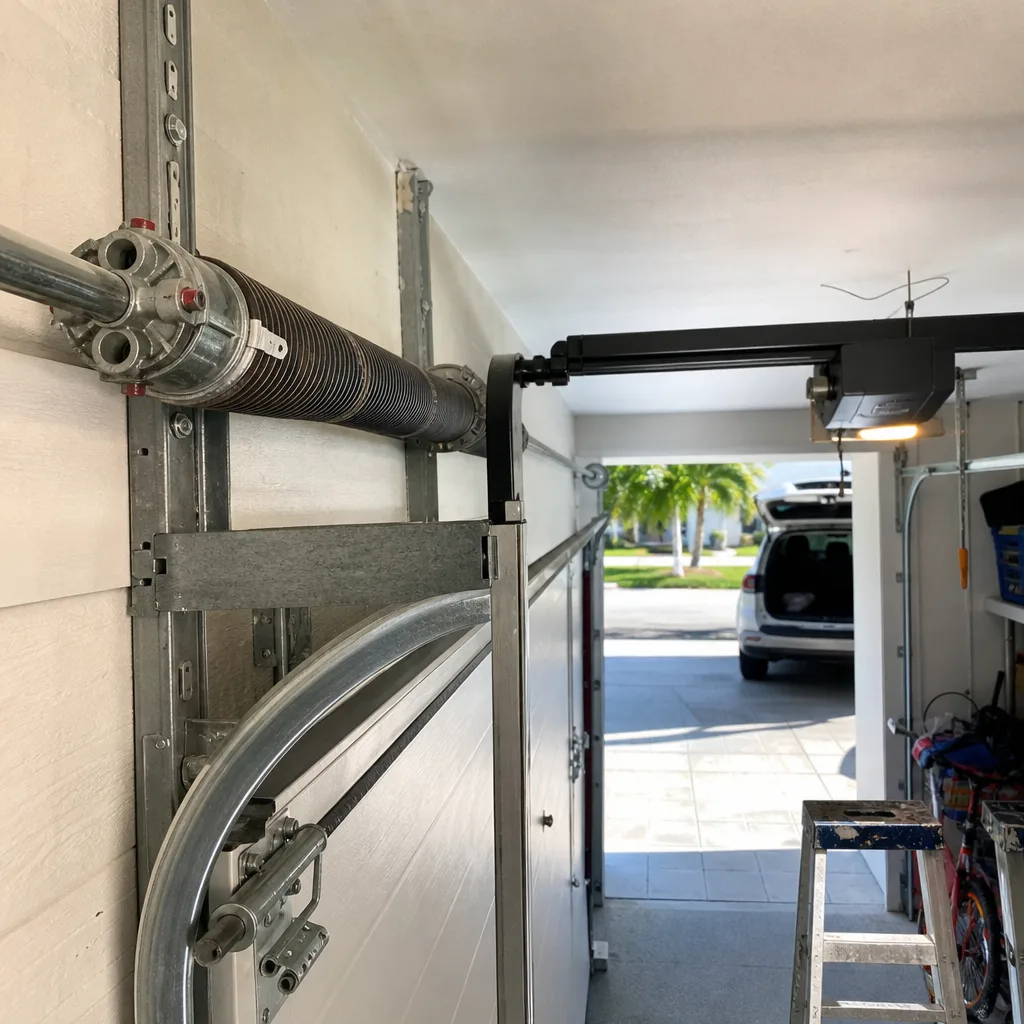
- Torsion spring replacement (pair): $220 to $390 installed, parts and labor
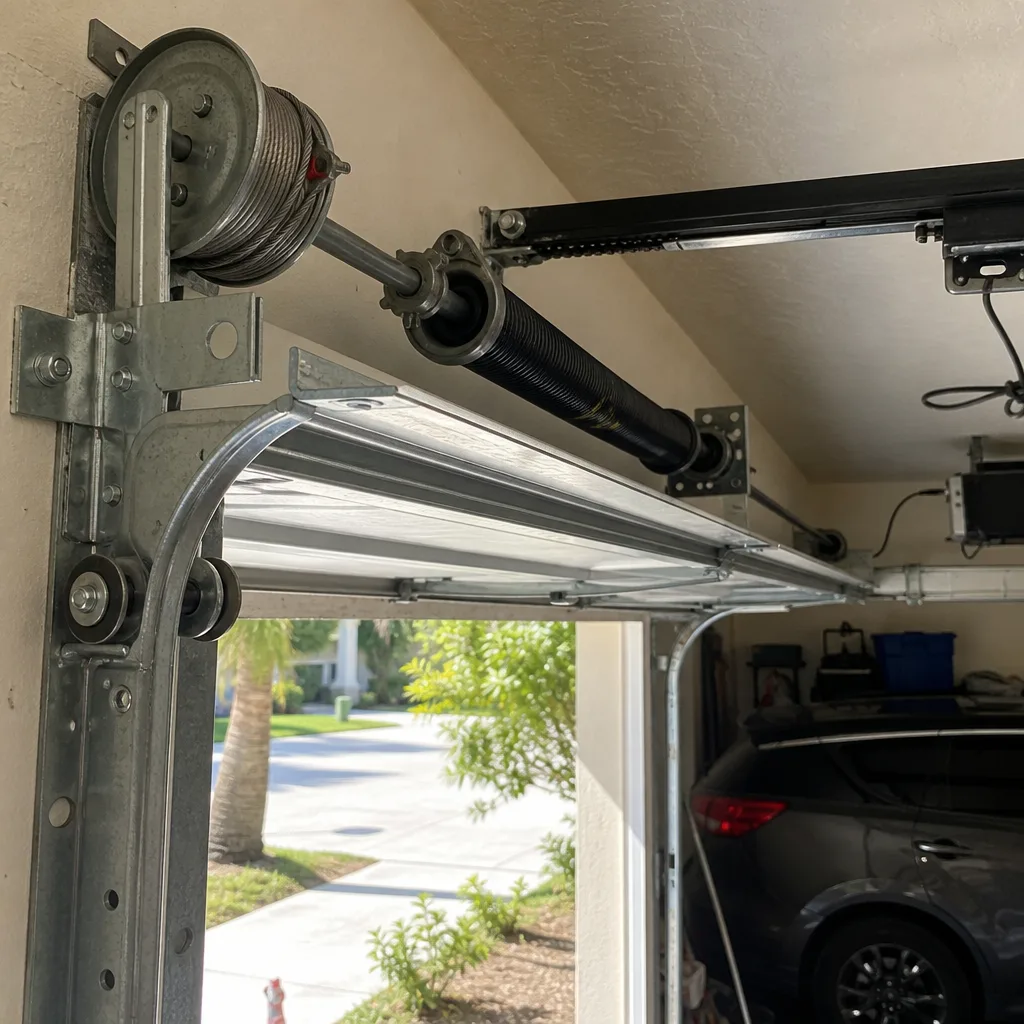
- Cable replacement (pair): $150 to $275 installed, depending on cable type and drum condition
- Opener replacement (motor, rail, safety sensors): $400 to $750 installed, depending on brand and drive type
These numbers assume a licensed and insured installer, Miami-Dade permit where required, and a written warranty. A cash deal from an unlicensed crew will quote lower and cost more, almost every time, because the door will either fail inspection, fail early, or both. For opener work, Garage Door Opener Repair in Miami should always include confirmation that the door itself is balanced, because a heavy door kills a new opener within months.
How to Read a Miami Garage Door Quote Without Getting Burned
The quote is where Miami homeowners get most of their problems. Not the door. The quote. A vague line item like “16×7 door with hurricane package” tells you nothing about whether the door will pass inspection, hold up to salt air, or match your wind zone. Here is how to read one like a pro:
- Look for an itemized NOA number. The quote should list the exact product approval number for the door and the track assembly being installed. If the quote does not include one, the door is probably not approved for Miami-Dade, no matter what the salesperson says.
- Check the design pressure line. The quote should state the DP rating for the door assembly and match it to your property’s wind-zone requirement. “Hurricane rated” is not a number. A real quote has a number.
- Look for the hardware spec. For homes within three miles of saltwater, the quote should specify stainless steel or aluminum hardware, not standard zinc-plated. If it does not specify, assume the cheapest hardware is going in.
- Confirm the spring and opener compatibility. The door quote should note the spring cycle rating (how many open and close cycles the springs are built for) and whether the existing opener will be re-used or replaced. A new heavy door on an old opener is a failure waiting to happen.
- Get the warranty in writing. Not just the door manufacturer’s warranty, which may be voided by a coastal installation anyway. The installer’s workmanship warranty should be written, with a clear duration and clear terms for return visits.
We write all of this down before any work starts. Every job gets a written price that spells out the door spec, the hardware, the NOA number, and the warranty terms. No verbal estimates that move at the door. It is how we have always worked, and it is the only way a Miami homeowner can verify what they are actually buying.
Common Mistakes to Avoid
- Buying a door without an NOA. A national retailer will happily ship you a door that has no Miami-Dade approval. It will arrive, look great, fail inspection, and you will eat the cost. Always verify the NOA before the order is placed.
- Choosing steel for a coastal home without upgrading hardware. Steel panels can survive Miami’s salt air, but the hinges, brackets, and track will not unless they are specified as stainless or aluminum. The door will rust at the edges and the hardware will fail before the panels do.
- Ignoring the wind zone until after installation. A door that “looks strong” is not the same as a door with a documented DP rating for your ZIP code. After a storm, the insurance adjuster will ask for the paperwork, not your opinion of how sturdy it feels.
- Running an old opener on a new heavy door. A reinforced impact-rated door weighs more than the builder-grade door that came off. An older Chamberlain or Genie opener that worked fine before will strain, overheat, and burn out early. Replace or upgrade the opener at the same time.
- Delaying a spring or cable repair. A broken torsion spring means the door’s full weight is no longer counterbalanced. Running the opener in that condition will destroy the motor, the gear, and possibly the door panels. Cables under tension are a safety issue; a snapped cable on a wound drum is dangerous to anyone standing nearby.
- Hiring the lowest bid on a cash basis. Unlicensed labor is common in Miami’s garage door market. The lower price disappears when the door fails inspection, the warranty does not exist, and the crew’s phone number stops working. Written pricing and a written warranty cost more on the front end and less over the life of the door.
When to Call a Professional
Some garage door work is reasonable for a careful homeowner: replacing weatherstripping, lubricating rollers and hinges with a garage-door-specific lubricant, replacing an opener remote. Other work is not. Torsion springs are under extreme tension and can cause serious injury if they release while being serviced. Cables, when they fail, can cut and lash. Track disassembly under load is not a weekend project. Any repair that involves the spring system, the cable drums, or the track anchoring should be handled by a trained technician with the right tools and the right safety setup. The cost of a professional repair is a fraction of the cost of an injury or a door that comes off its track and damages the car, the house, or a person. For help deciding, read our DIY vs Professional Garage Door: The Miami Homeowner’s Decision Guide.
Brock Garage Doors Miami offers free estimates in Miami; call (850) 403-9654 and a live person will answer, any time, day or night.
Frequently Asked Questions
Yes, if your home is in Miami-Dade County and the door is being replaced or newly installed, it must carry an active Miami-Dade NOA that matches your property’s wind zone; an unapproved door will fail inspection and may void your windstorm insurance coverage.
A code-compliant single-car door in Miami typically runs $1,100 to $2,200 installed depending on material and wind rating, while a double-car door runs $1,800 to $4,200; repairs like springs and cables run $150 to $390. Call (850) 403-9654 for a written quote on your specific door, estimates are free.
A well-maintained, code-compliant door in Miami lasts 12 to 18 years depending on material, proximity to saltwater, and whether the hardware was specified for coastal conditions; springs last 7 to 10 years and openers 8 to 12.
We do not recommend it. Installing an HVHZ-compliant door requires precise track alignment, correct anchoring, and proper spring tensioning, and Miami-Dade permits typically require a licensed contractor; the risk of getting the installation wrong is not worth the savings.
Yes. After a windstorm, your insurer will verify that the door carried a valid NOA and was installed correctly; a mismatch between the door and the approval is one of the most common reasons windstorm claims get denied or reduced in Miami.
Aluminum with stainless or aluminum hardware is the most durable choice for homes within three miles of saltwater in Miami; fiberglass works well for inland coastal lots, and reinforced galvanized steel is a solid value for inland homes that still require wind-load compliance.
The Bottom Line
A Miami garage door is a code decision, a material decision, and a climate decision before it is anything else. Get the NOA right, match the wind-load rating to your ZIP code, pick the material that fits your distance from the bay, and get every number in writing before the first bolt turns. If the quote does not have an NOA number and a DP rating on it, keep looking. If the installer will not put the warranty in writing, keep looking. If the work is more than weatherstripping and lubrication, call someone who does this every day in Miami. Brock Garage Doors Miami home is here when you need a straight answer and a written price.
Written by Wade Mercer, Owner at Brock Garage Doors Miami, serving Miami since 2001.
See the difference
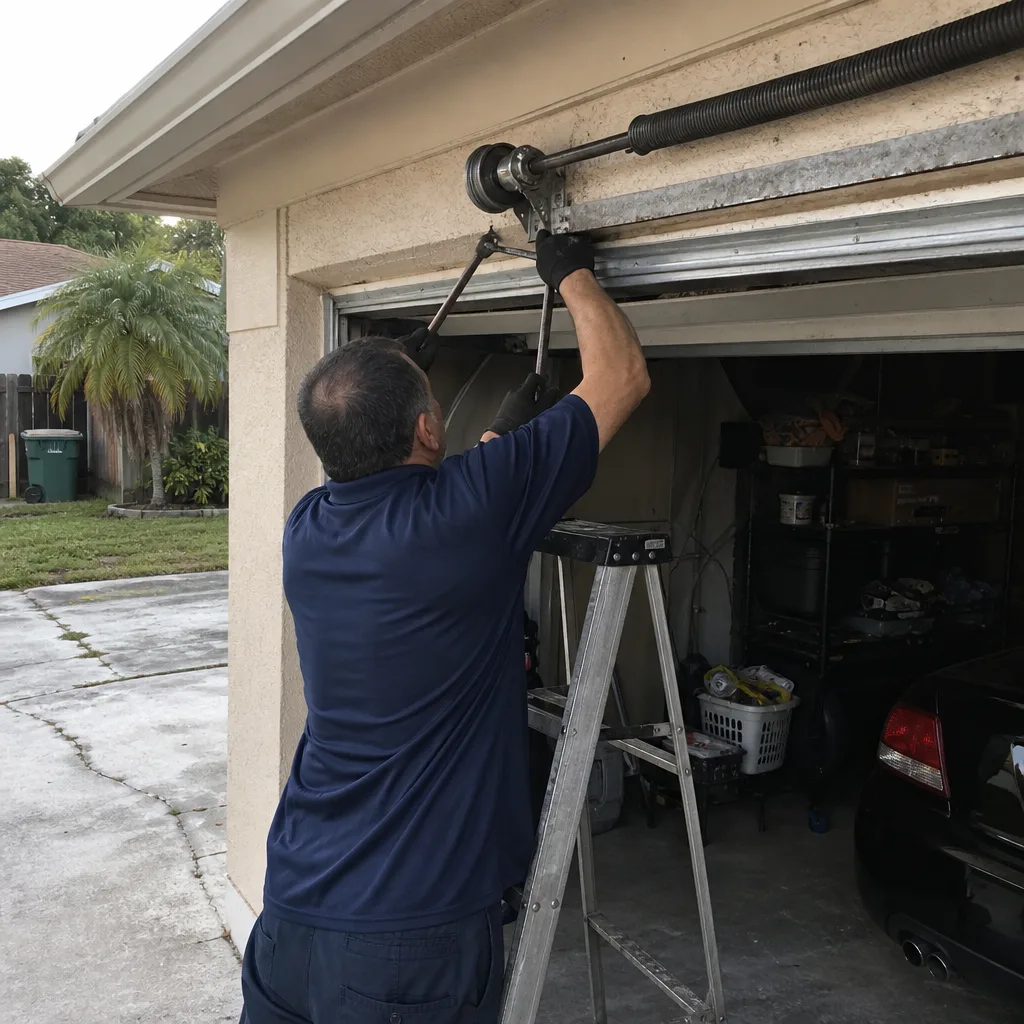 Before
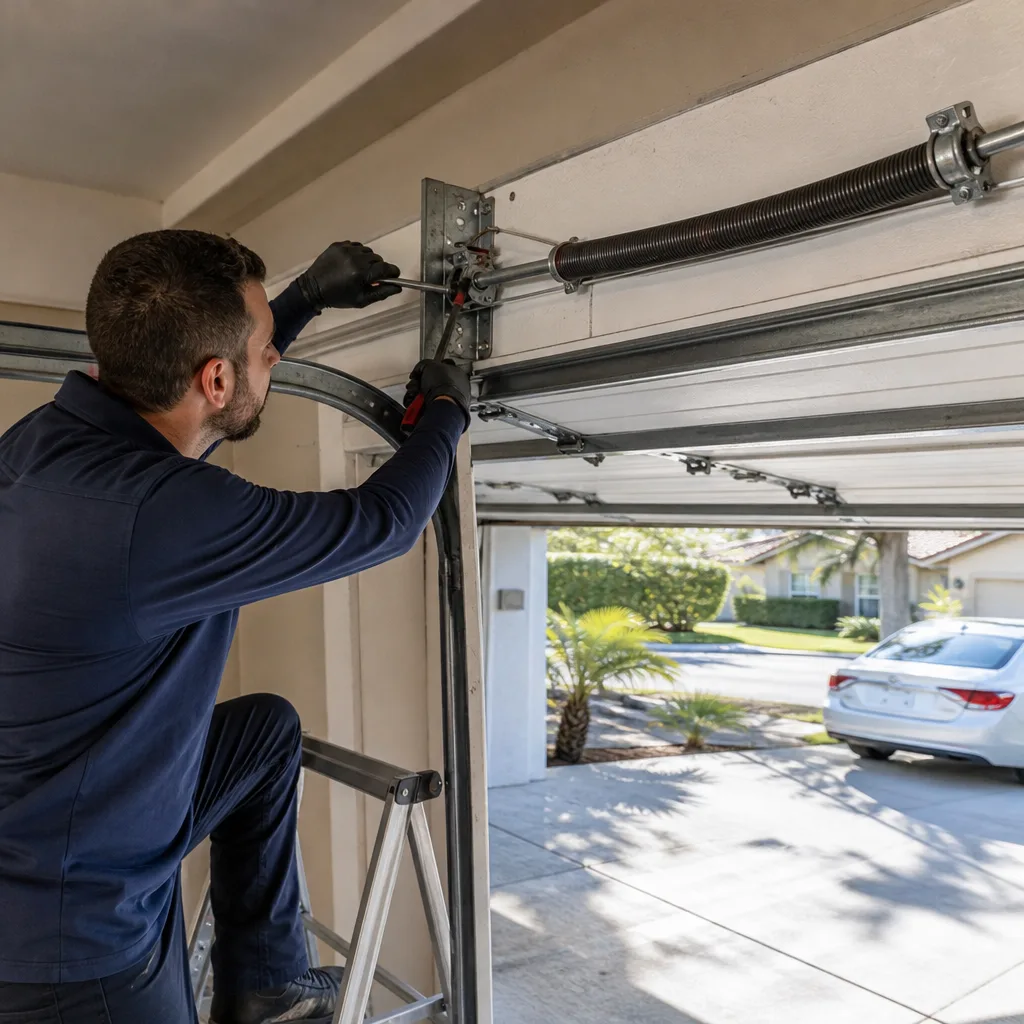 After
After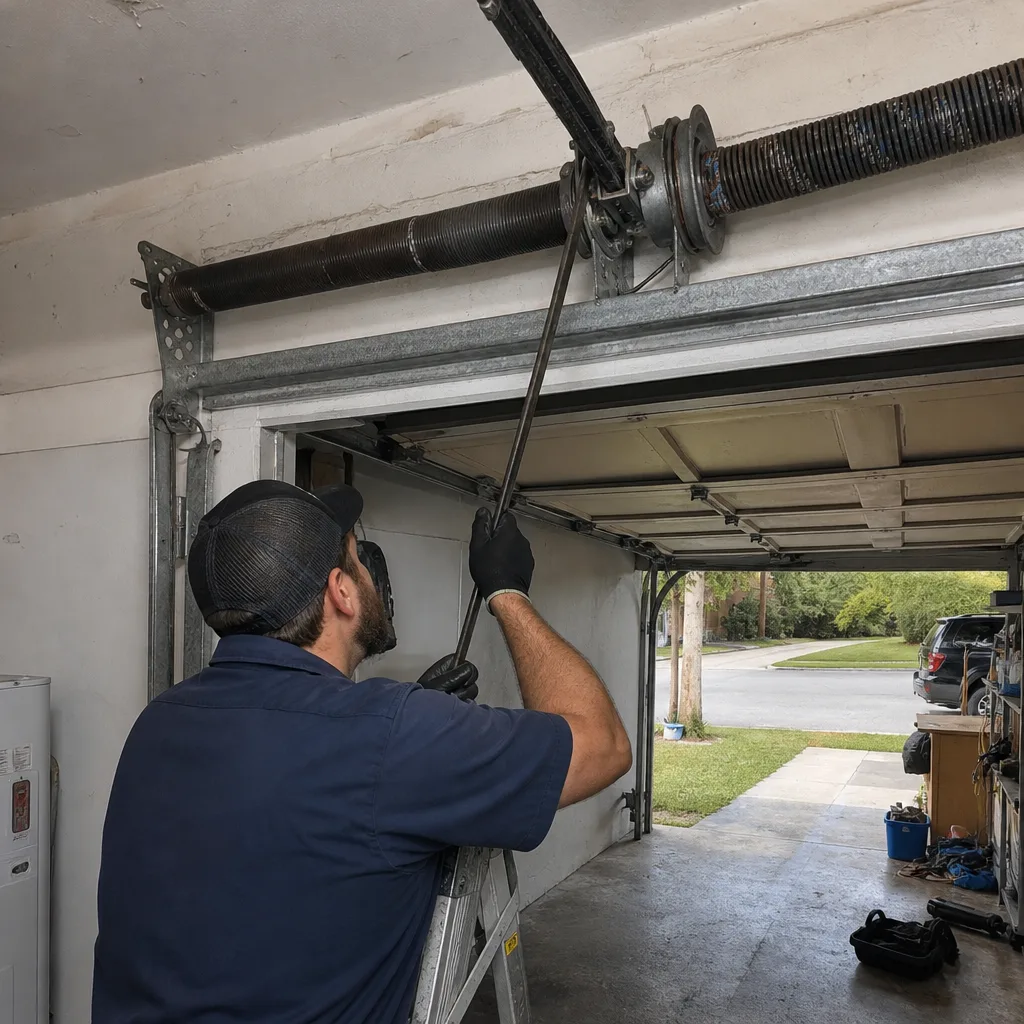 Before
 After
After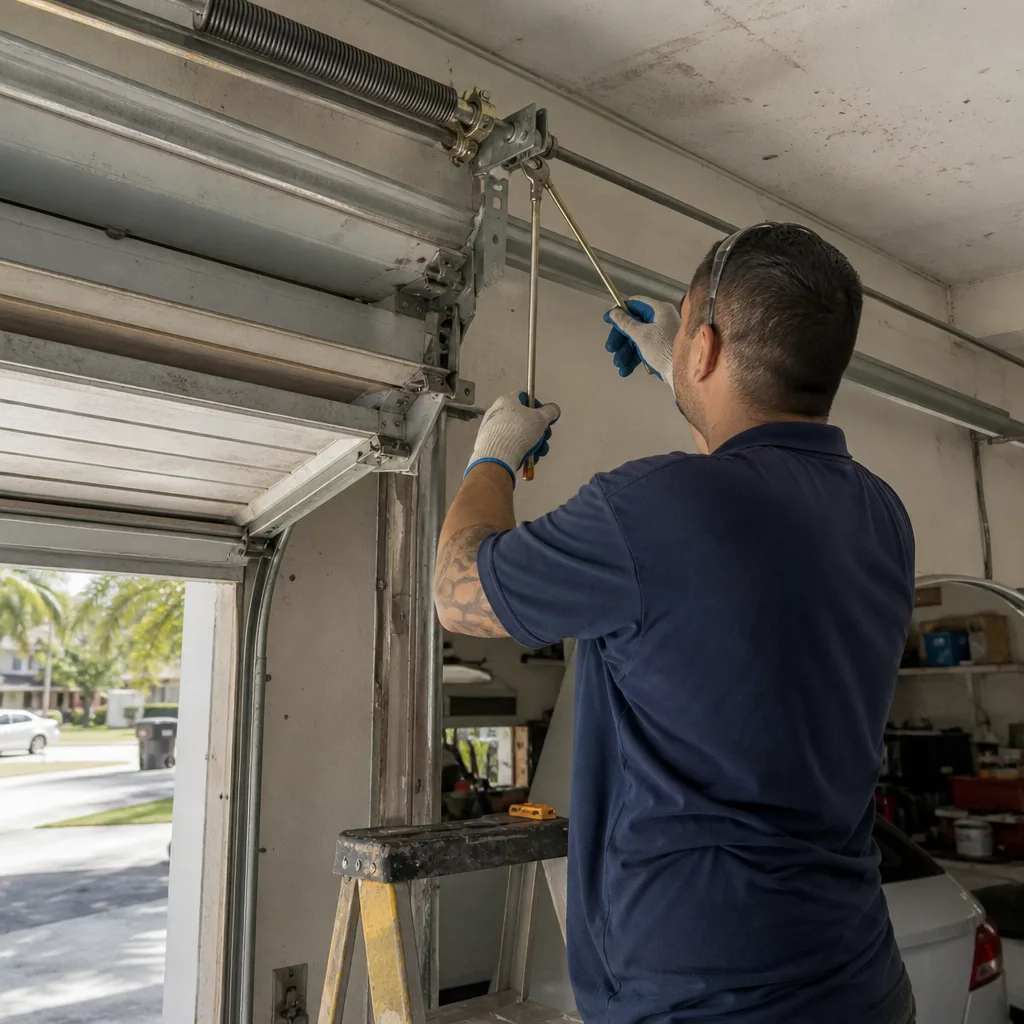 Before
 After
After